

One type of carrot never makes it to the shop floor. It’s not particularly old, nor is it rotten or bruised. It simply has two legs instead of one, is bent incorrectly, or tapers off at an angle that a buyer somewhere decided wasn’t quite right. Although they don’t always express it politely, farmers have a term for this type of rejection.
The topic of vegetables that no one wanted to grow anymore kept coming up at a recent meeting of dairy farmers and members of a food policy council because selling them was the problem, not properly growing them. Sitting in a room with people who have worked in the field for decades, discussing cosmetic standards the way you would discuss a challenging boss, is an odd experience. There’s a sense of resignation mixed with frustration, as if they’ve come to terms with a somewhat ridiculous system.
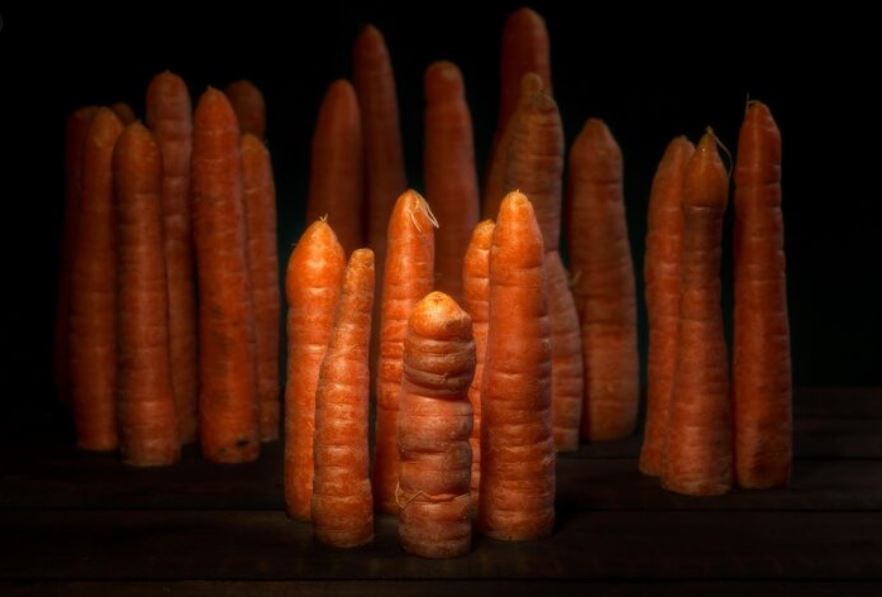
Even though most consumers purchasing baby carrots in plastic bags are unaware of the origin of the concept, the baby carrot is arguably the most well-known example of this whole mess. In 1986, a grower who was dealing with mountains of broken and malformed carrots discovered that he could shave them into uniform little nubs and sell them as a snack. It was successful. It was so successful that instead of just accepting imperfection, an entire industry was built around hiding it. That’s almost funny, but it’s also a little depressing.
For their part, supermarkets did not suddenly develop this obsession. Generally speaking, consumers do choose the rounder tomato, the straighter carrot, and the flawless apple. Produce aisles that have been trained to look a certain way for decades have reinforced this learned instinct. However, the farmer who is left with a field of perfectly edible vegetables and nowhere to sell them is not the one who truly gains from that instinct.
Eventually, the EU relaxed some of its marketing restrictions on irregular produce, which at the time seemed to be a tacit acknowledgement that the regulations had gone too far. The headlines joked that crooked carrots could now be sold shamelessly. However, how much that actually changed at the till is still unknown. In retail, outdated practices often outlive the regulations designed to address them.
Instead, a smaller, scrappier, and strangely more intriguing parallel market is beginning to emerge. Nowadays, businesses focus their entire operations on saving the unsightly items, packaging them, and delivering them directly to consumers’ homes before they are ever placed on a store shelf. Others use the leftovers to make soup, relish, or baby food, giving vegetables that, in theory, did nothing wrong but grew as nature intended a second chance at life.
With all of this, there’s a sense that the carrot has evolved into an improbable stand-in for a larger debate about waste, conceit, and our perception of what food should look like. At that farmers’ meeting, nobody seemed to believe that the issue would be resolved in a short amount of time. However, there was a subtle but perhaps optimistic feeling that the tyranny of the ideal carrot might finally be receding from the aisle.
FAQs
1. What is “the tyranny of the perfect carrot”?
It refers to cosmetic standards that cause edible but misshapen vegetables to be discarded.
2. When were baby carrots first developed?
They were developed in 1986 to use up broken, irregular carrots.
3. Did the EU change its rules on imperfect produce?
Yes, it loosened marketing restrictions to reduce cosmetic-based food waste.
4. What is Oddbox?
A UK delivery service that brings surplus, imperfect produce to homes.
5. What happens to rejected carrots?
Many get turned into soups, relishes, or baby food instead of being binned.
