Close Menu
Tim Smyth ArtTim Smyth Art
    Facebook X (Twitter) Instagram
    Facebook X (Twitter) Instagram
    Tim Smyth ArtTim Smyth Art
    Subscribe
    • Home
    • Art Of Photography
    • Art and Culture
    • Latest
    • Celebrities
    • News
    • Privacy Policy
    • Contact US
    • Terms Of Service
    • About Us
    Tim Smyth ArtTim Smyth Art
    Home » Why Some of the Best Documentary Photography Today Is Made in Collaboration With Its Subjects
    Art Of Photography

    Why Some of the Best Documentary Photography Today Is Made in Collaboration With Its Subjects

    Georgia WestonBy Georgia WestonJuly 3, 2026No Comments4 Mins Read
    Facebook Twitter Pinterest LinkedIn Tumblr Email
    Share
    Facebook Twitter LinkedIn Pinterest Email

    There’s a particular photograph that tends to come up in discussions about the future of documentary photography. A professional with a press credential did not take it. It came from a community workshop in Lagos, shot by a sixteen-year-old who had been given a camera as part of a collaborative project with a visiting documentarian. The image — a market stall at dusk, a woman mid-laugh, cloth piled around her like a throne — is striking in the way that planned shots rarely are. It feels true because it was made from the inside.

    Documentary photography has spent more than a century operating on a specific set of assumptions: the photographer arrives, observes, captures, and leaves. The most skilled practitioners handled this with extreme tact. Dorothea Lange in the camp of pea pickers in California. Lewis Hine in the cotton mills. Driving across America, Robert Frank was not always aware that he was being observed. The images they created have genuine moral significance. However, that model also carried a gap, sometimes a chasm, between the subject of the lens and the subject behind it.
    Why Some of the Best Documentary Photography Today Is Made in Collaboration With Its Subjects
    Why Some of the Best Documentary Photography Today Is Made in Collaboration With Its Subjects

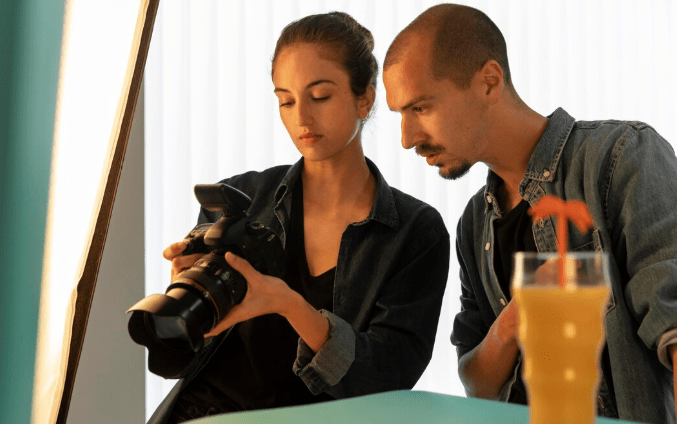
    That gap is what a growing number of photographers are now trying to close, or at least examine honestly. The most interesting work being produced at the moment seems to involve something more reciprocal than the traditional assignment-and-departure model, though this change isn’t complete or consistent. Before raising a camera, photographers stay in communities for months. Before publishing, some people share drafts with their subjects. Others are collaborating with individuals to influence what is initially documented.

    Basic accountability may be contributing to this. It is now much more difficult to take a picture of someone in a challenging situation and have it vanish into a magazine archive thanks to the internet. Subjects find their pictures. They respond. They push back. And some photographers, encountering that pushback, have found it genuinely useful — not just ethically, but creatively. Information is when someone claims that the picture you took of them is inaccurate. Information, but hard information.

    The outcomes may be unexpected. Before creating a single photograph that could be published, a photographer in a former mining area of South Wales had to spend eighteen months going back to the same streets. What emerged from that period was a body of work that included handwritten captions from residents, portraits taken at their direction, and images of objects they chose to show rather than ones he noticed, as opposed to a collection of depressing exterior shots, which is what you would expect and what had been done previously. Three galleries in Europe hosted the project’s tour. It was praised by critics as the most truthful piece about post-industrial Britain they had seen in a long time.

    There are obvious objections to this way of working. The traditional claim to authority in documentary photography is based in part on its independence, or the notion that the subject’s preferences have no bearing on the photographer’s eye. Does something crucial get lost if subjects influence the narrative? It’s still unclear whether collaboration and neutrality can genuinely coexist, or whether neutrality was always something of a fiction to begin with.

    What seems harder to argue against is the quality of the work itself. These more cooperative methods often result in photographs that have a texture that distance doesn’t. Something that the traditional borrowed-moment approach seldom accomplishes is present in them: a specificity, a mutual recognition. Seeing people clearly has always been the key to the best documentary photography. It turns out that sometimes, the clearest way to see someone is to ask them what they want you to look at.

    Collaboration Documentary
    Share. Facebook Twitter Pinterest LinkedIn Tumblr Email
    Georgia Weston

      Georgia Weston writes about migration stories, photography, and the changing aesthetics of contemporary cities. She also writes about the politics of public space, visual storytelling, and modern culture. Her research examines how deeper social structures are reflected in everyday settings, food systems, and art. She gives stories at the nexus of image and society a sharp yet measured voice, with an emphasis on documentary practices and cultural identity.

      Related Posts

      How Documentary Photography Differs From Photojournalism — And Why the Distinction Matters

      July 3, 2026

      The Ethical Line Documentary Photographers Walk Every Time They Raise a Camera

      July 3, 2026

      Why Informed Consent Is Becoming the Most Debated Issue in Documentary Photography Right Now

      July 3, 2026
      Leave A Reply Cancel Reply

      You must be logged in to post a comment.

      Art Of Photography

      How Documentary Photography Differs From Photojournalism — And Why the Distinction Matters

      By Georgia WestonJuly 3, 20260

      Most people have seen this picture, but they don’t know its name. In 1936, Dorothea…

      Why Some of the Best Documentary Photography Today Is Made in Collaboration With Its Subjects

      July 3, 2026

      The Ethical Line Documentary Photographers Walk Every Time They Raise a Camera

      July 3, 2026

      Why Informed Consent Is Becoming the Most Debated Issue in Documentary Photography Right Now

      July 3, 2026

      The Quiet Power of Documentary Photography – Why a Single Image Can Still Shift Public Opinion

      July 2, 2026

      Why Blind Judging Is Becoming the Gold Standard at Major Photography Festivals

      July 2, 2026

      What Judges Are Actually Looking for in Documentary Photography Competitions in 2026

      July 2, 2026

      Why Documentary Photography Festivals Are Becoming Spaces for Activism, Not Just Exhibition

      July 2, 2026

      From Moments to Arcs – Why Long-Form Visual Storytelling Is Replacing the Single Iconic Photograph

      June 30, 2026

      Why Most Working Documentary Photographers Are Freelance — And What That Actually Means for the Industry

      June 30, 2026

      The Untrained Eye Is Now the Most Trusted Eye: How Local Photographers Are Rewriting Global News

      June 29, 2026

      The Last Roll of Film: How 2026 Became the Year Analog Fought Back Against the Algorithm

      June 29, 2026

      How Tim Smyth’s My Son’s Absence Gave Migrants a Dignity That News Cameras Never Could

      June 29, 2026

      Why Raw Documentary Work Is Quietly Replacing Perfect Photos in 2026

      June 27, 2026

      Why Tim Smyth’s Approach to Documentary Photography Resists the Industry’s Need for Spectacle

      June 27, 2026
      Facebook X (Twitter) Instagram Pinterest
      © 2026 ThemeSphere. Designed by ThemeSphere.

      Type above and press Enter to search. Press Esc to cancel.