Close Menu
Tim Smyth ArtTim Smyth Art
    Facebook X (Twitter) Instagram
    Facebook X (Twitter) Instagram
    Tim Smyth ArtTim Smyth Art
    Subscribe
    • Home
    • Art Of Photography
    • Art and Culture
    • Latest
    • Celebrities
    • News
    • Privacy Policy
    • Contact US
    • Terms Of Service
    • About Us
    Tim Smyth ArtTim Smyth Art
    Home » Why Documentary Photography Festivals Are Becoming Spaces for Activism, Not Just Exhibition
    Art Of Photography

    Why Documentary Photography Festivals Are Becoming Spaces for Activism, Not Just Exhibition

    Georgia WestonBy Georgia WestonJuly 2, 2026No Comments3 Mins Read
    Facebook Twitter Pinterest LinkedIn Tumblr Email
    Share
    Facebook Twitter LinkedIn Pinterest Email

    It’s difficult to pinpoint the precise moment when something changed at photography festivals over the past few years. There was no press release or curatorial statement accompanying the change. It crept in through conversations over bad festival coffee, through the kinds of photographs being submitted and selected, through the questions photographers started asking each other in panel discussions that kept running fifteen minutes over time because no one wanted to stop talking.

    Photography festivals were never completely impartial gatherings. Implied values about what’s worth looking at, whose story merits a wall, and for whom the work is intended are present in even the most formalist assemblies. However, the version of these celebrations that took place ten years ago felt more at ease being somewhat cut off from the outside world. Making exhibitions is a form of improvement. Craft over consequence. That version is becoming harder to find.
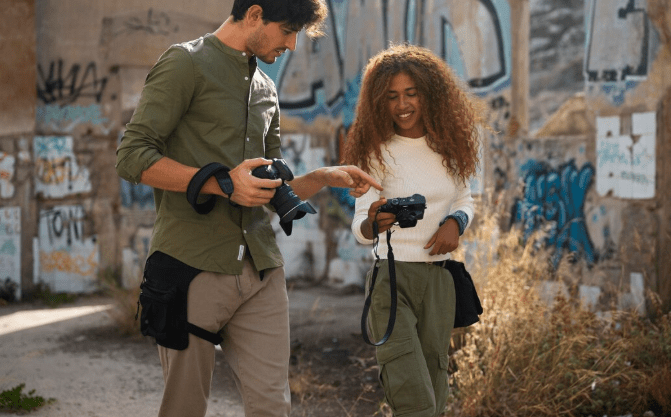
    Why Documentary Photography Festivals Are Becoming Spaces for Activism, Not Just Exhibition
    Why Documentary Photography Festivals Are Becoming Spaces for Activism, Not Just Exhibition

    When Ashley Riffo started exploring why photography festivals have become so popular in 2026, the answer that kept surfacing wasn’t about exhibitions at all. It was about people finding each other. Speaking following his third visit to the Dublin Street Photography Festival, Andrew Glickman described what sounded more like reuniting with a community that had been waiting for him than attending an artistic event. Photographers who had followed each other’s work online for years were suddenly in the same room, talking about why they made the pictures they made. It turns out that the quality of that conversation is different in person.

    The documentary tradition seems to have always been aiming for this. Tenement slums in New York were visually appealing to Jacob Riis, but he chose not to photograph them. Because it made for interesting compositions, Lewis Hine did not spend years in American factories recording child labor. The camera was constantly being used for purposes other than its own. These days, festivals appear to be making that service more explicit, more communal, and more debated in real time.

    Zanele Muholi’s participation in the PhotoVogue Festival 2026 discussions brought something that is typically hidden to light. Muholi discussed images as interventions rather than representations, characterizing their own work as visual activism rather than photography. The difference is important. A representation shows you something. An intervention tries to change the conditions under which you see it. A festival becomes more of an argument rather than just a showcase when it incorporates that kind of thinking into its programming.

    Some attendees might find this uncomfortable. It’s not always easy to transform festivals centered around aesthetic pleasures into places of political demand. There is a genuine conflict between the urgency that activist documentary work seeks to create and the contemplative nature of gazing at a skillfully taken picture. Depending on who you ask and what initially led them there, you may find that the tension is either productive or destabilizing.

    It is more difficult to argue against the fact that photographers themselves are becoming more interested in these events because the discourse has grown. Deborah Cole’s description of the Raw Photo Fest in Menorca, where individuals from various nations and languages congregate around shared artwork and questions, sounds less like a symposium and more like something being worked out collaboratively in real time. The photos serve as the foundation. More often than not, the curators didn’t anticipate where the conversation would end up. Perhaps more than anything else, that indicates that something truly fascinating is taking place.

    Activism Festivals
    Share. Facebook Twitter Pinterest LinkedIn Tumblr Email
    Georgia Weston

      Georgia Weston writes about migration stories, photography, and the changing aesthetics of contemporary cities. She also writes about the politics of public space, visual storytelling, and modern culture. Her research examines how deeper social structures are reflected in everyday settings, food systems, and art. She gives stories at the nexus of image and society a sharp yet measured voice, with an emphasis on documentary practices and cultural identity.

      Related Posts

      What Judges Are Actually Looking for in Documentary Photography Competitions in 2026

      July 2, 2026

      From Moments to Arcs – Why Long-Form Visual Storytelling Is Replacing the Single Iconic Photograph

      June 30, 2026

      Why Most Working Documentary Photographers Are Freelance — And What That Actually Means for the Industry

      June 30, 2026
      Leave A Reply Cancel Reply

      You must be logged in to post a comment.

      Art Of Photography

      What Judges Are Actually Looking for in Documentary Photography Competitions in 2026

      By Georgia WestonJuly 2, 20260

      The majority of photographers who compete in documentaries spend weeks contemplating the shot. The light,…

      Why Documentary Photography Festivals Are Becoming Spaces for Activism, Not Just Exhibition

      July 2, 2026

      From Moments to Arcs – Why Long-Form Visual Storytelling Is Replacing the Single Iconic Photograph

      June 30, 2026

      Why Most Working Documentary Photographers Are Freelance — And What That Actually Means for the Industry

      June 30, 2026

      The Untrained Eye Is Now the Most Trusted Eye: How Local Photographers Are Rewriting Global News

      June 29, 2026

      The Last Roll of Film: How 2026 Became the Year Analog Fought Back Against the Algorithm

      June 29, 2026

      How Tim Smyth’s My Son’s Absence Gave Migrants a Dignity That News Cameras Never Could

      June 29, 2026

      Why Raw Documentary Work Is Quietly Replacing Perfect Photos in 2026

      June 27, 2026

      Why Tim Smyth’s Approach to Documentary Photography Resists the Industry’s Need for Spectacle

      June 27, 2026

      Nearly a Third of Photographers Explored a New Genre Last Year — Documentary Work Led the List

      June 27, 2026

      The Local Turn: How 31 of 42 World Press Photo Winners in 2026 Came From the Story Itself

      June 27, 2026

      Why Documentary Photographers Are Walking Away From Commercial Work for the First Time in a Decade

      June 27, 2026

      The Quiet Obsession Behind Tim Smyth’s Photography: One Question, Many Subjects

      June 27, 2026

      The Bristol Photographer Whose Subjects Range From Discarded Food to Displaced People

      June 25, 2026

      Inside Tim Smyth’s Quiet Obsession With What Gets Left Behind

      June 24, 2026
      Facebook X (Twitter) Instagram Pinterest
      © 2026 ThemeSphere. Designed by ThemeSphere.

      Type above and press Enter to search. Press Esc to cancel.