

There was a time in 2012 or 2013 when photography appeared to come to a consensus. Punchy, shareable, and expertly cropped, the single image became the currency of visual culture. Instagram rewarded it. Newsrooms adjusted to it. And whether they realized it or not, photographers started pursuing it. Ten years later, something is subtly changing once more.
The type of long-form photo essays that W. Eugene Smith meticulously constructed throughout the pages of Life in 1948, tracking a rural physician through weariness, dust, and quiet human dignity, is making a comeback. Not out of nostalgia, but as something that people appear to genuinely require.
The question of why is worthwhile. Oversaturation is the short answer. Today, more photos are taken in an hour than were taken during the entire 19th century, and the majority of them disappear seconds after they are displayed on a screen. The one iconic image is buried rather than completely gone in that setting. Narrative is increasingly what breaks through the clutter. order. The viewer is compelled to stay rather than scroll past due to the gradual accumulation of meaning over several frames.
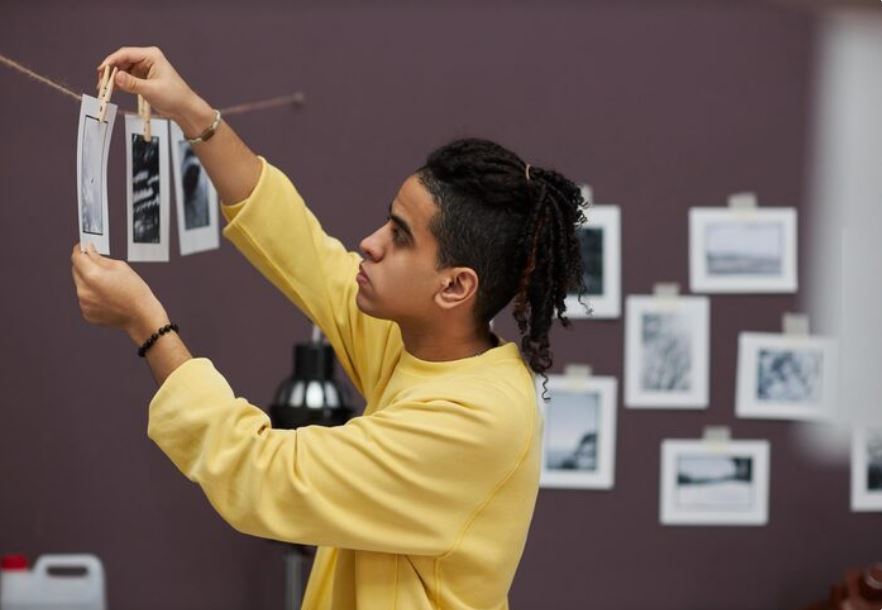
This way of thinking is not wholly novel. About 17,000 years ago, hunters arranged bison and lions in scenes that moved, implied before and after, and told a story rather than just depicting it, as suggested by the caves at Lascaux. The distinction between an image and a narrative was recognized even by early Christian painters. A series of panels conveys fate, while a single figure on a panel conveys presence. It took some time for photography to catch up, but by the middle of the century, it had discovered its equivalent: the essay, the series, the meticulously ordered portrait of a location or a person.
The essay format itself was disrupted by the digital age, but so was the type of searching that was necessary. It seems as though viewers were trained to take in images in a matter of seconds, first slowly and then quickly. platforms designed with that behavior in mind. Photographers made adjustments. For a while, this new rhythm seemed to be ideal for the pivotal moment—that Cartier-Bresson concept of the single frame that contains everything. One picture, complete clarity, no need for context.
However, it turns out that context is precisely what people are currently craving. It feels more like a correction than a trend to see long-form photo essays making a comeback in recent years. Photographers are creating audiences who genuinely want to spend fifteen minutes with a body of work by publishing on independent platforms, personal websites, and Substack. who wish to know where a picture was taken, who is in it, what happened before the shutter clicked, and what happened after. The picture becomes a chapter rather than a monument.
It’s difficult to ignore the fact that this change comes at the same time as a general weariness with carefully manicured perfection. A genuine desire for work that feels unresolved, ongoing, and human has been sparked by years of filtered, optimized, performance-driven content. Long-form visual storytelling does that because it is honest about the fact that no single moment ever truly contained the whole truth, not because it is messier.
It’s unclear and probably the wrong question to ask whether this indicates that the iconic single photograph is complete. It seems more likely that photography is just recalling what it already knew, which is that a story told over time, across frames, and over the gradual accumulation of detail lands differently than a single frame ever could. It remains with you. As you leave the room, it follows you.
FAQs
1. Why are long-form photo essays making a comeback?
Audiences, exhausted by visual overload, are craving slower, more meaningful narrative experiences.
2. What caused the decline of the photo essay in the first place?
Social media platforms rewarded fast, standalone images over immersive, context-rich visual storytelling.
3. How does long-form visual storytelling differ from a single iconic photograph?
It builds meaning across multiple frames rather than compressing everything into one moment.
4. Where are photographers publishing long-form essays today?
Mostly on independent platforms like Substack, Medium, and personal high-resolution websites.
5. Is the single iconic photograph becoming obsolete?
No — but narrative sequences now satisfy something a solitary frame simply cannot.
