Close Menu
Tim Smyth ArtTim Smyth Art
    Facebook X (Twitter) Instagram
    Facebook X (Twitter) Instagram
    Tim Smyth ArtTim Smyth Art
    Subscribe
    • Home
    • Art Of Photography
    • Art and Culture
    • Latest
    • Celebrities
    • News
    • Privacy Policy
    • Contact US
    • Terms Of Service
    • About Us
    Tim Smyth ArtTim Smyth Art
    Home » Why Blind Judging Is Becoming the Gold Standard at Major Photography Festivals
    Art Of Photography

    Why Blind Judging Is Becoming the Gold Standard at Major Photography Festivals

    Georgia WestonBy Georgia WestonJuly 2, 2026No Comments3 Mins Read
    Facebook Twitter Pinterest LinkedIn Tumblr Email
    Share
    Facebook Twitter LinkedIn Pinterest Email

    Over the past few years, there has been a subtle shift in the photography industry that most outsiders have completely missed. The people who choose the winning images at festivals from Sydney to Berlin no longer see names. There are no agency connections, Instagram handles, or reputations associated with the work. Just the picture itself, sitting there, requesting to be evaluated according to its own standards.

    It sounds clear. It probably should have been standard practice decades ago. But it wasn’t, and that gap between what competitions claimed to offer and what they actually delivered has been gnawing at working photographers for a long time.

    The logic behind blind judging isn’t complicated. When a panel knows whose work they’re looking at, they carry that knowledge with them into the assessment — whether they intend to or not. A well-known name creates expectation. When submitting for a European award, a lesser-known photographer from a non-English-speaking nation may encounter subtler conflict without ever realizing it. The image is the same either way. It’s not the reception. Transparency scoring systems and anonymised submissions are now being positioned as a correction to that problem, and the shift is gathering momentum at some of the most visited festivals on the calendar.
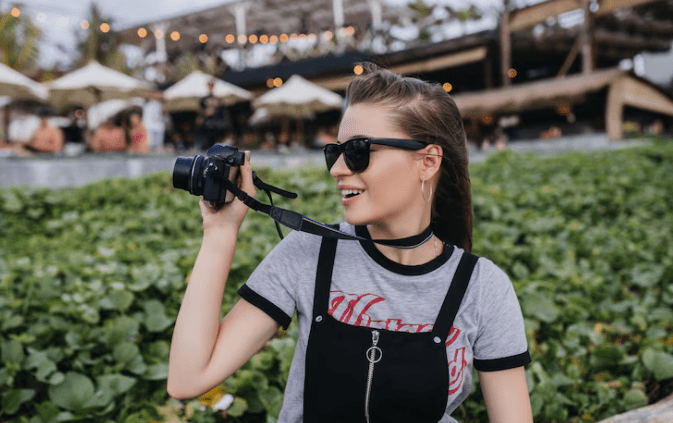
    Why Blind Judging Is Becoming the Gold Standard at Major Photography Festivals
    Why Blind Judging Is Becoming the Gold Standard at Major Photography Festivals

    Over 400,000 people attend Sydney’s Head On Photo Festival each year, and its dedication to blind judging has come to serve as a model for how large events should organize their procedures. It seems that when a festival of that magnitude incorporates anonymization into its identity, other events begin to take notice. Not precisely due to pressure, but rather because the audience is also paying attention.

    It’s important to keep in mind the source of some of this annoyance. Photographers have observed that “award-winning” has become one of the most overused terms in creative biographies. Every new competition that emerges somewhat dilutes the ones that preceded it. The judging process is more important than ever when credibility is already in jeopardy. At the very least, blind systems return the query to the picture.

    However, not everyone believes the model applies to all situations. Context is almost always present in documentary and photojournalism categories; an image’s value can be inextricably linked to its location, the person who took it, and the circumstances. Stripping that information away to satisfy a neutrality principle doesn’t always serve the work. It’s still unclear whether the industry will land on a single approach or whether different festival types will simply adopt different standards depending on their genre focus.

    The Berlin Photo Awards, running this year with a prize pool of €4,000 and an exhibition at its conclusion, has been moving toward clearer judging criteria and entry transparency. The Urban Photo Awards 2026 are distributing €45,000 across categories. These are not trivial sums, and the photographers submitting are not hobbyists filling in time. There’s money, reputation, and in some cases, career trajectory on the line. It is reasonable to expect the process to withstand scrutiny.

    It seems more and more likely that photographers will no longer take a competition’s claimed prestige as proof of its honesty. They want to know how scoring is done, who the judges are, and if their name is visible to the person reviewing their work. In photography contests, blind judging is not a perfect solution. However, it eliminates one of the most obvious ones, and as of right now, that appears to be sufficient to make it the strategy that serious festivals are supporting.

    Blind Judging
    Share. Facebook Twitter Pinterest LinkedIn Tumblr Email
    Georgia Weston

      Georgia Weston writes about migration stories, photography, and the changing aesthetics of contemporary cities. She also writes about the politics of public space, visual storytelling, and modern culture. Her research examines how deeper social structures are reflected in everyday settings, food systems, and art. She gives stories at the nexus of image and society a sharp yet measured voice, with an emphasis on documentary practices and cultural identity.

      Related Posts

      What Judges Are Actually Looking for in Documentary Photography Competitions in 2026

      July 2, 2026

      Why Documentary Photography Festivals Are Becoming Spaces for Activism, Not Just Exhibition

      July 2, 2026

      From Moments to Arcs – Why Long-Form Visual Storytelling Is Replacing the Single Iconic Photograph

      June 30, 2026
      Leave A Reply Cancel Reply

      You must be logged in to post a comment.

      Art Of Photography

      Why Blind Judging Is Becoming the Gold Standard at Major Photography Festivals

      By Georgia WestonJuly 2, 20260

      Over the past few years, there has been a subtle shift in the photography industry…

      What Judges Are Actually Looking for in Documentary Photography Competitions in 2026

      July 2, 2026

      Why Documentary Photography Festivals Are Becoming Spaces for Activism, Not Just Exhibition

      July 2, 2026

      From Moments to Arcs – Why Long-Form Visual Storytelling Is Replacing the Single Iconic Photograph

      June 30, 2026

      Why Most Working Documentary Photographers Are Freelance — And What That Actually Means for the Industry

      June 30, 2026

      The Untrained Eye Is Now the Most Trusted Eye: How Local Photographers Are Rewriting Global News

      June 29, 2026

      The Last Roll of Film: How 2026 Became the Year Analog Fought Back Against the Algorithm

      June 29, 2026

      How Tim Smyth’s My Son’s Absence Gave Migrants a Dignity That News Cameras Never Could

      June 29, 2026

      Why Raw Documentary Work Is Quietly Replacing Perfect Photos in 2026

      June 27, 2026

      Why Tim Smyth’s Approach to Documentary Photography Resists the Industry’s Need for Spectacle

      June 27, 2026

      Nearly a Third of Photographers Explored a New Genre Last Year — Documentary Work Led the List

      June 27, 2026

      The Local Turn: How 31 of 42 World Press Photo Winners in 2026 Came From the Story Itself

      June 27, 2026

      Why Documentary Photographers Are Walking Away From Commercial Work for the First Time in a Decade

      June 27, 2026

      The Quiet Obsession Behind Tim Smyth’s Photography: One Question, Many Subjects

      June 27, 2026

      The Bristol Photographer Whose Subjects Range From Discarded Food to Displaced People

      June 25, 2026
      Facebook X (Twitter) Instagram Pinterest
      © 2026 ThemeSphere. Designed by ThemeSphere.

      Type above and press Enter to search. Press Esc to cancel.