

In the 2022 BBC3 documentary about Gerry Anderson, the producer of Thunderbirds, the director inserts a deepfake reconstruction of Anderson in which he speaks in his own voice and says things that he actually said. The director, Benjamin Field, stated, “I’m looking at deepfake as a way of telling the truth.” This statement has stuck in the minds of media scholars ever since. Depending on your point of view, that sentence is either a liberating statement or a minor catastrophe for the nonfiction genre.
The relationship between the filmmaker and their subject is already complicated, and documentary filmmakers were among the first to use deepfake technology to replace the faces or voices of people they present to their audiences. Of course, that disruption has always existed. Documentary filmmakers have never had a flawless relationship with reality; they select which interviews make it through the edit, cut scenes, and choose angles. But now something seems different. The distinction between creating reality and capturing it has become so close that they might be interchangeable.
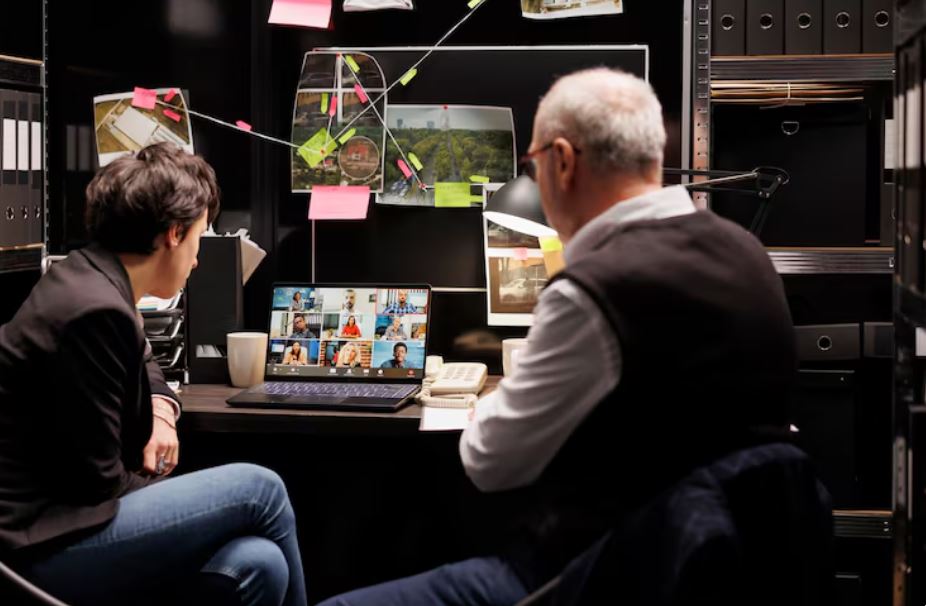
The camera served as a sort of legal witness for over a century. It verified the presence of a face in a room, the words a politician spoke, or the way an event transpired. Images and video had what could be called “default credibility”—they weren’t perfect, but they were presumed to be truthful until they weren’t. That presumption has essentially fallen apart in 2025. With a single click, entire worlds can be simulated, speeches can be cloned in minutes, and faces can be switched in a matter of seconds. The credibility that is currently eroding was the foundation upon which the documentary form was constructed.
In nonfictional forms of representation and engagement, documentary filmmakers are presumed to be significant stakeholders in truth and trust. Therefore, it is truly odd that they have been the ones entering deepfake territory at the fastest rate. Filmmakers may see something that critics do not: when technology is used properly, it can recreate events for which there is no footage, recover testimony from the dead, or give voice to those who were never permitted to speak on camera. That’s a strong case. Additionally, once accepted, this type of argument is extremely difficult to refute.
Between 2019 and 2023, the amount of deepfake content increased by over 550 percent, and the tools used to create it shifted from specialized research labs to consumer software accessible to anyone with a laptop. The documentary industry didn’t create that acceleration, but it does exist within it. The same methods a BBC3 filmmaker employs to recreate a cherished television producer can be used, using the same technology, to create an atrocity that never occurred. Sitting with that symmetry is both uncomfortable and worthwhile.
Sophisticated forensic analysis is frequently needed to prove the falsity of a convincing deepfake, and current laws might not be sufficient to handle the subtleties of deepfake crimes. For generations, courts have relied on visual evidence. Because footage could be verified in ways that text alone could not, news editors have published it. The harm to public trust may already be done if that evidentiary weight disappears, not because deepfakes are ubiquitous but rather because people now legitimately question whether they could be. This was foreseen years ago by legal scholars Danielle Citron and Robert Chesney, who dubbed it the “liar’s dividend”—the point at which fakes become so convincing that real footage can be written off as fake. It’s no longer a theoretical moment.
Observing the proliferation of this technology gives one the impression that the documentary industry is at a turning point that it hasn’t yet fully recognized. Deepfakes are a transparent, labeled storytelling tool that can be used to reconstruct history and depict events that were not captured by cameras. This approach leads to a sort of creative expansion. The alternative course, which is less talked about but much more likely, results in a gradual breakdown of the social compact that initially gave the documentary its significance. The ability of a deepfake to tell the truth isn’t really the question. In the right hands, it most likely can. The question is whether viewers will be able to distinguish between the two and whether they will even attempt to do so in ten years.
