

There is a belief that permeates painters’ studios; it’s the kind of thing that no one talks about, but everyone seems to be aware of. You will lose a piece of the person you love if you paint them. Not all at once. Not very loudly. The way heat escapes a room after the door has been left open for too long is slowly. Some artists dismiss it with a laugh. Some won’t even talk about it. Surprisingly, many people just won’t try.
It’s odd how obstinate the notion has grown. The old superstition still holds even though painters now work with phones in their pockets and algorithms influencing their feeds. Artists trade near the wine table, and you can hear it in conversations at small openings and in those incomplete sentences. There is always a pause when someone brings up a picture of a parent, a partner, or a sister. A tiny wince. a “I wouldn’t have done it” expression.
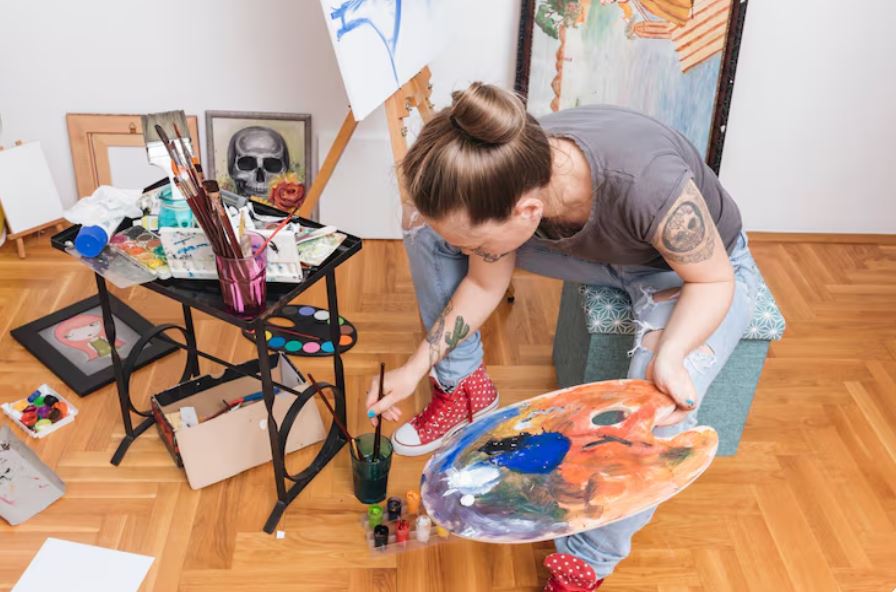
In the realm of small-format painting, where intimacy is the theme and intimacy is encouraged by the scale, the myth has a gentler relative. The viewer is urged to lean in by these pieces. to breathe close to them. That has a certain tenderness, but it also carries some risk. Painting small is an admission of guilt. Furthermore, confession has a price, even on canvas. Perhaps this is the reason why some artists like the sound of a big installation that conceals the maker behind its size, the safety of distance, or the cool geometry of abstraction.
Another issue is the gaze, a topic that has been discussed for a long time in art theory but is still relevant today. It is never neutral to look. The looker and the looked-at are rearranged. Something changes when a painter spends hours studying a beloved face. The individual turns into a study. The research becomes an issue. After the issue has been resolved on the canvas, it may seem strangely closed, as though the relationship itself has been resolved. You begin to comprehend the reluctance when you see friends who paint experience this.
None of this can be proven, of course. There is no information on lost love and portraits, nor is there a graph that compares the drying time of oil paint to emotional deterioration. The curse may be simply romanticized selection bias; artists tend to focus on relationships that endure while forgetting those that don’t. However, the belief endures, and persistent beliefs typically contain some truth. It’s not just painters who worry that too much observation can alter something. The same thing worries writers. On slower days, photographers confess.
However, the refusal itself remains. The painter who never draws a wife. The portraitist who works only from strangers. The figurative artist who completely avoids showing her own family. These decisions are simple to ignore, but they create a sort of unspoken code of conduct within the studio, stating that certain intimate details should not be translated. There is no answer to the question of whether that preserves the love or just starves the art. And perhaps no one can. The fear that underlies the myth endures because it is carried from one studio to another like a damp cloth—useful, unwashed, and somehow still functional.
