Close Menu
Tim Smyth ArtTim Smyth Art
    Facebook X (Twitter) Instagram
    Facebook X (Twitter) Instagram
    Tim Smyth ArtTim Smyth Art
    Subscribe
    • Home
    • Art Of Photography
    • Art and Culture
    • Latest
    • Celebrities
    • News
    • Privacy Policy
    • Contact US
    • Terms Of Service
    • About Us
    Tim Smyth ArtTim Smyth Art
    Home » The Studio as Sanctuary in an Age of Digital Noise – Why Artists Are Building Walls Against the Algorithm
    News

    The Studio as Sanctuary in an Age of Digital Noise – Why Artists Are Building Walls Against the Algorithm

    Georgia WestonBy Georgia WestonMay 13, 2026No Comments3 Mins Read
    Facebook Twitter Pinterest LinkedIn Tumblr Email
    Share
    Facebook Twitter LinkedIn Pinterest Email

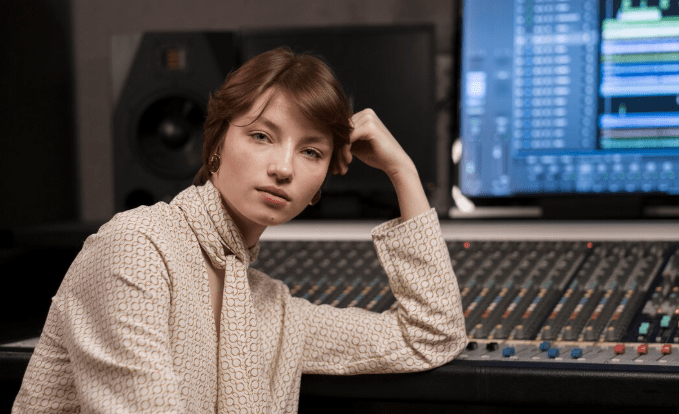
    You can practically feel the negotiation taking place inside any working studio at night, the ones with thick walls and a single burning lightbulb. Someone is attempting to think. Someone is attempting to avoid scrolling. The majority of the work is being done by the door rather than the equipment.

    It’s difficult to ignore how frequently artists now use language that was previously only used to describe chapels or libraries when describing their studios. Half-jokingly, a producer in Karachi informed me that he had begun locking his phone in a drawer and leaving it in another room. When he said that, he laughed. It’s no longer a joke, though, because the drawer contained a key and the key had a hiding place.
    The Studio as Sanctuary in an Age of Digital Noise
    The Studio as Sanctuary in an Age of Digital Noise

    At a symposium in Melbourne last year, Eryk Salvaggio described the information age as having subtly shifted into an era of noise. Information used to be hard to come by, but these days it permeates every surface we own. In August 2023, Spotify revealed that three million hours of white noise had been streamed by its users. noise to block out other sounds. The joke seems to write itself, but no one is laughing.

    The reaction inside studios has been more akin to reorganization than retreat. Their windows are painted over. Tomato-shaped mechanical timers are purchased by writers. According to an ethnographic study conducted in Adelaide, electronic musicians treat the studio as a modern autonomous zone. This term was taken from a nineteenth-century German philosopher who most likely never thought of a Logic Pro session. In that context, the studio turns into a place where you can remember who you are.

    Though from a different perspective, David Banner, the Mississippi producer responsible for several Southern rap hits, has publicly discussed this same instinct. He started characterizing stillness and meditation as survival tools rather than luxuries after years of chronic exhaustion, public weight swings, and a public reckoning with depression and anxiety. He described the industry’s attempt to capture his interest as a form of psychological warfare. He might be correct. The grammar is appropriate.

    All of this has a slightly depressing quality. The studio was never intended to be a stronghold. It was meant to be a well-lit room with a door that would close when necessary. The reason for the existence of the fortress version is that the alternative—leaving the door open—now entails allowing in approximately 2.3 billion training images, along with every push, notification, and algorithmic recommendation regarding the sound of your next song.

    What’s emerging appears to be a renegotiation of technology’s terms rather than a rejection of it. Plugins are still used by producers. Painters continue to take pictures of their creations. The studio door, which was formerly a formality, has evolved into a minor and obstinate policy. a line that is drawn around the time of day when the work is actually done.

    Whether this counter-current will endure or be absorbed, branded, and resold to us as a wellness package is still up in the air. Most likely both. For now, though, someone is locking a drawer somewhere tonight. Someone is preferring the bright, weightless churn of the feed to the slow, heavy quiet of a real room. Even though it’s a small decision, it may be the most genuine creative action left.

    Age of Digital Noise Sanctuary
    Share. Facebook Twitter Pinterest LinkedIn Tumblr Email
    Georgia Weston

    Georgia Weston writes about migration stories, photography, and the changing aesthetics of contemporary cities. She also writes about the politics of public space, visual storytelling, and modern culture. Her research examines how deeper social structures are reflected in everyday settings, food systems, and art. She gives stories at the nexus of image and society a sharp yet measured voice, with an emphasis on documentary practices and cultural identity.

    Related Posts

    Paint by Numbers – The Hidden Discipline Behind Monumental Chaos

    May 11, 2026

    The Human Cost of a Headline – What Newsrooms Forget When the Cameras Move On

    May 11, 2026

    Syria, Prints and Protest – When Photography Funds Resistance

    May 7, 2026
    Leave A Reply Cancel Reply

    You must be logged in to post a comment.

    News

    The Studio as Sanctuary in an Age of Digital Noise – Why Artists Are Building Walls Against the Algorithm

    By Georgia WestonMay 13, 20260

    You can practically feel the negotiation taking place inside any working studio at night, the…

    Why Obsession Is the Artist’s Most Dangerous Tool

    May 13, 2026

    Paint by Numbers – The Hidden Discipline Behind Monumental Chaos

    May 11, 2026

    The Human Cost of a Headline – What Newsrooms Forget When the Cameras Move On

    May 11, 2026

    Memory as Evidence – Art in the Age of Forced Migration

    May 11, 2026

    Borders in the Frame – How Photographers Navigate Power

    May 8, 2026

    The Ethics of Charity Editions in Political Art – Where Conscience Meets Commerce

    May 8, 2026

    Syria, Prints and Protest – When Photography Funds Resistance

    May 7, 2026

    Who Gets Documented — And Who Disappears? Inside Pakistan’s Quiet Crisis

    May 7, 2026

    The Visual Language of Exile – How Displaced Artists Speak Without Words

    May 5, 2026

    Lampedusa and the Politics of Image – How a Tiny Island Became Europe’s Most Photographed Border

    May 5, 2026

    My Son’s Absence – Art as Testimony in a Time of Displacement

    May 5, 2026

    The Faces of Arrival – Europe’s Quiet Refugee Story Nobody Wants to Tell

    May 5, 2026

    The Quiet Revolution Behind the Ugly Carrot in Your Kitchen

    May 5, 2026

    The Myth of Freshness: Inside the Industrial Illusion

    April 29, 2026
    Facebook X (Twitter) Instagram Pinterest
    © 2026 ThemeSphere. Designed by ThemeSphere.

    Type above and press Enter to search. Press Esc to cancel.