

The Pantanal wetlands were photographed in 2020; there are no flames visible, only smoke plumes rising above a dark tree canopy and a terrible, thin line separating the forest from the haze. No spectacle from a horror movie. No dramatic orange sky, no burning houses. Just the beginning of an irreversible process. It is one of the most disturbing pictures created in recent memory because of its restraint. Additionally, it poses a question that editors, photographers, and climate activists have been debating for years without really coming up with a solution: what does the camera really do when the environment it was designed to capture begins to vanish?
The genre of social landscape photography, which originated in mid-century documentary traditions and is based on direct, unaltered observation of the natural world, is undergoing a sort of reckoning. The genre was based on a sort of reverence for the majority of its existence. You composed the frame, waited for the light, and hauled the equipment up the mountain. The whole point was to be patient. The tripod and the large-format camera served as tools for reflection. The resulting picture gave the impression that nature was eternal, majestic, and bigger than whatever was going on in the cities below. Not because the craft has collapsed, but rather because the subject has evolved underneath it, that version of the practice now feels, in minor ways, like a relic.
The relationship between landscape photography and time has changed in an odd way as a result of the climate crisis. A glacier’s recession is recorded year by year, a lake’s waterline slowly declining over ten years—things that the genre once depicted slowly—now occur so quickly that the deliberate pace of the medium seems almost ludicrous. Over the course of fifty years, Lake Chad has shrunk by about 90%, according to NASA satellite imagery. This change has been so drastic that “before and after” pictures of the lake have begun to look completely different. Once a wall of blue ice, Iceland’s Breiðamerkurjökull glacier has receded, leaving behind a lagoon full of drifting pieces. The subject of the photograph has moved underfoot, but the photography itself hasn’t changed all that much.
A reorientation of the genre toward its human edges is emerging, in part due to necessity and in part due to sincere moral conviction. A few years ago, Fiona Shields, the picture editor for The Guardian, predicted that iconic wildlife imagery, such as the starving polar bear and the scorched forest, would gradually give way to other images, such as mask-wearing people, kids going through trash, and families traveling. For the most part, this prediction has come true. Photographers in this field are beginning to feel that, despite its technical beauty, the image of distant destruction has run out of political tension. It records without establishing a connection. It shocks without blaming. The spectator looks, is momentarily moved, and moves on.
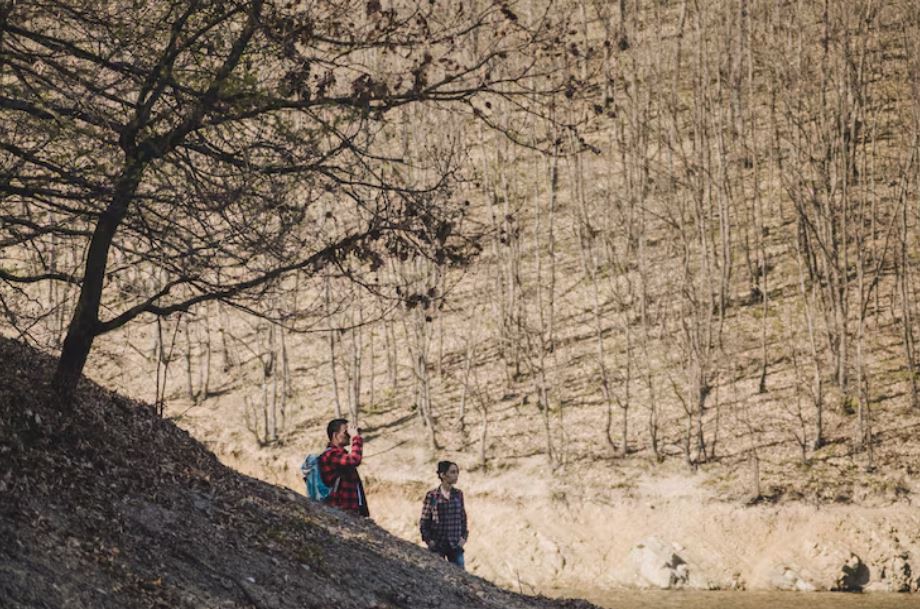
What photographers are truly searching for has changed as a result of the shift toward climate justice as a framing. Some are focusing on the communities—often indigenous, low-income, and historically marginalized—whose lives are being reshaped by changes in local ecosystems rather than taking flights to the Arctic to document ice loss. For a farming family that has worked that land for three generations, what does a flooding river mean? What does drought look like in a community that never had dependable water infrastructure in the first place? These pictures aren’t particularly lovely. Instead of composing around them, they force the photographer to sit uncomfortably. However, despite its grandeur, abstract aerial photography frequently falls short of delivering this kind of truth.
Whether this change completely resolves the conflict between making nature scenic and making it visible, which has always been at the heart of landscape photography, is still up for debate. Photographers such as Edward Burtynsky have dedicated their careers to the aestheticization of industrial ruin, creating visually striking images that, for a brief moment, make the destruction they capture seem lovely. That is a valid criticism that the field is still addressing. There isn’t a simple solution. Nothing is changed by a picture that nobody wants to look at.
The old model—lone photographer, isolated location, singular sublime image—seems to be giving way to something more collaborative, rooted locally, and focused on the people within the frame rather than the horizon behind them. In the context of a climate crisis, social landscape photography is gradually shifting from a practice of wonder to one of witness, albeit not without controversy. Perhaps what endures long enough to be captured on camera will determine whether wonder ever fully reappears.
