Close Menu
Tim Smyth ArtTim Smyth Art
    Facebook X (Twitter) Instagram
    Facebook X (Twitter) Instagram
    Tim Smyth ArtTim Smyth Art
    Subscribe
    • Home
    • Art Of Photography
    • Art and Culture
    • Latest
    • Celebrities
    • News
    • Privacy Policy
    • Contact US
    • Terms Of Service
    • About Us
    Tim Smyth ArtTim Smyth Art
    Home » Paint by Numbers – The Hidden Discipline Behind Monumental Chaos
    News

    Paint by Numbers – The Hidden Discipline Behind Monumental Chaos

    Georgia WestonBy Georgia WestonMay 11, 2026No Comments3 Mins Read
    Facebook Twitter Pinterest LinkedIn Tumblr Email
    Share
    Facebook Twitter LinkedIn Pinterest Email

    In my aunt’s hallway in Lahore, there is a small painting that doesn’t quite go with the rest of her decor. It is framed with a thin gold border. It depicts a lakefront cottage, the kind of scene you might see on a biscuit tin. Decades ago, she painted it herself using a kit her brother had returned from a trip. Every time visitors come through, she still brings it up. The afternoons she spent working on it, not the painting itself. She recalls the quiet of those afternoons.

    Strangely enough, in 2026, people are returning to painting by numbers because of that kind of memory. The kits never truly disappeared. Until something changed, they simply sat in the corner of craft stores, ridiculed as something for agitated kids or retirees. People seem to be fed up with being told to be creative these days. They’re also sick of mindfulness apps that require them to breathe in time with the voice of a stranger. None of that is required when you sit down with a numbered canvas. There are already regulations in place. You simply do as they say.
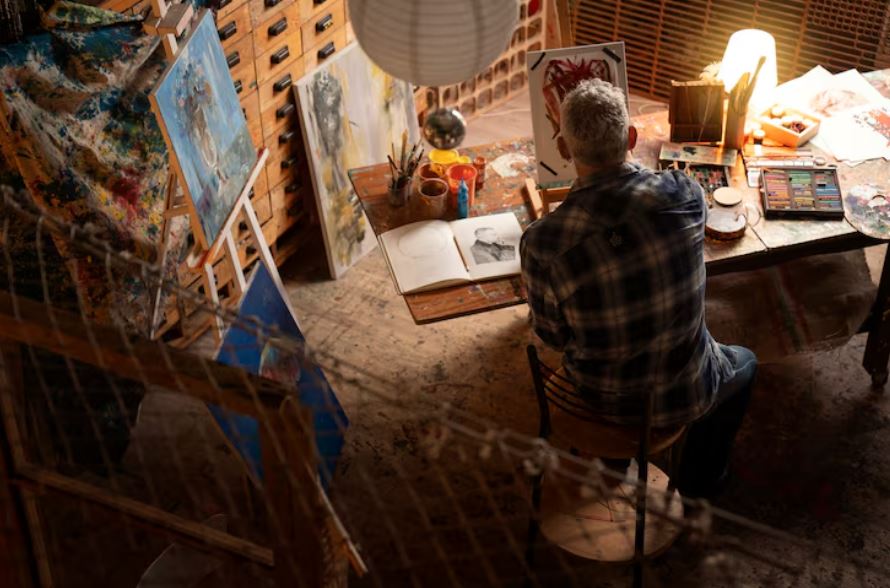
    Paint by Numbers: The Hidden Discipline Behind Monumental Chaos
    Paint by Numbers: The Hidden Discipline Behind Monumental Chaos

    Leonardo da Vinci’s practice of assigning partial work to his apprentices is said to have inspired Dan Robbins, who created the first kits at Palmer Paint Company. It’s a romantic tale that may have been polished over time. According to records, the kits were selling at a remarkable rate by 1955 and were displayed in both formal and informal settings, including suburban dens and the White House. They were despised by critics. They were written off as the end of taste by Clement Greenberg’s circle. However, the kits outlived the majority of those critics, which speaks to what people genuinely desire from wall art.

    Who is purchasing them now is a mystery. Mothers with two hours on Sundays, wellness writers, and software engineers. The structure is not as restrictive as previously believed. It’s the allure. According to British psychotherapist Kate Lewis, an anxious mind is worn out by making decisions all the time. Eliminating the choice may seem like a tiny act of kindness. You’re not wondering if you have anything to say while gazing at a blank canvas. The canvas has already expressed itself. All you’re doing is assisting it in speaking.

    During the pandemic years, I witnessed a few friends pick up these kits and continue to do so long after the lockdowns were lifted. Every two months, one of them, an architect, completes a painting. She informed me that she enjoys the work’s limited scope. There is a start and a finish. There is nothing like that in her real job. As you watched her explain it, it became clear that the borders surrounding the painting, rather than the painting itself, were what made it appealing.

    One could argue that this is a rejection of something more significant. of the visual world being overtaken by generative AI. of social media’s insistence that everything be intimate and expressive. That might be overinterpreting it. However, there is a subtle logic to taking a brush, aligning it with a numbered patch, and precisely filling in the blanks. The mayhem beyond the canvas is enormous. Its discipline is modest, controllable, and sufficient in some way.

    Hidden Discipline Monumental Chaos
    Share. Facebook Twitter Pinterest LinkedIn Tumblr Email
    Georgia Weston

    Georgia Weston writes about migration stories, photography, and the changing aesthetics of contemporary cities. She also writes about the politics of public space, visual storytelling, and modern culture. Her research examines how deeper social structures are reflected in everyday settings, food systems, and art. She gives stories at the nexus of image and society a sharp yet measured voice, with an emphasis on documentary practices and cultural identity.

    Related Posts

    Inside PhotoVogue Festival’s 10th Edition and What It Reveals About Visibility and the Gaze

    June 23, 2026

    The Last Resort, 40 Years On – Why Martin Parr’s Most Famous Series Still Defines British Photography

    June 19, 2026

    The Documentary Zone at Xposure 2026 Tackled Climate, Displacement, and Memory — Here’s What Stood Out

    June 18, 2026

    Comments are closed.

    Art Of Photography

    Why So Many 2026 Photography Festivals Are Centering Migration as a Core Theme

    By Georgia WestonJune 23, 20260

    Migration was not chosen as the 2026 theme by a group of people. It is…

    How AI Entered the Conversation at One of Europe’s Biggest Photography Fairs This Year

    June 23, 2026

    Inside PhotoVogue Festival’s 10th Edition and What It Reveals About Visibility and the Gaze

    June 23, 2026

    Why World Press Photo’s 2026 Long-Term Project Category Is Becoming More Important Than the Single Image

    June 22, 2026

    The Tuscan Hill Town Festival Quietly Becoming a Global Hub for Documentary Storytelling

    June 22, 2026

    Why a Festival About Vulnerability Is Reshaping How Documentary Photography Gets Curated

    June 22, 2026

    Inside Photo London 2026 – What the UK’s Biggest Photography Fair Reveals About Where the Industry Is Heading

    June 19, 2026

    The Last Resort, 40 Years On – Why Martin Parr’s Most Famous Series Still Defines British Photography

    June 19, 2026

    Why Nearly Half of Professional Photographers Still Don’t Know What to Charge for Their Work

    June 19, 2026

    How Tim Smyth Turned a Pile of Misshapen Carrots Into a Yale and MoMA Collection Piece

    June 19, 2026

    The Strange Link Between Tim Smyth’s Carrot Portraits and His Refugee Photography in Spoleto

    June 19, 2026

    Why Tim Smyth Photographs Rejected Vegetables Like Museum Artifacts

    June 19, 2026

    C2PA Verification Is Now a Legal Requirement in Some Photojournalism Contracts — What It Actually Does

    June 19, 2026

    Documentary Photography Is the Fastest-Growing Genre Photographers Want to Shoot in 2026 — Here’s Why

    June 18, 2026

    22% of World Press Photo’s 2026 Entrants Were Women and Non-Binary — Here’s Why That Number Matters

    June 18, 2026
    Facebook X (Twitter) Instagram Pinterest
    © 2026 ThemeSphere. Designed by ThemeSphere.

    Type above and press Enter to search. Press Esc to cancel.