

There is a sort of theater going on when you walk through the produce section of any supermarket. The rows of peppers were almost identical. No apple hanging from a real tree ever quite reaches the shine of an apple that has been waxed. Geometrically consistent cucumbers could have been engineered, and in a regulatory sense, they were. You’re not witnessing abundance. It’s a meticulously crafted illusion with a price that most consumers are unaware of.
Globally, up to 40% of fresh fruits and vegetables are rejected before they ever make it to retail shelves. This is not because they are dangerous or nutritionally deficient, but rather because they are the incorrect shape, the wrong size, or have flaws unrelated to flavor. A carrot is still a carrot even if it splits into two legs at the bottom. The strawberry in the punnet next to it has the same vitamins as the one that grew small and uneven in a wet June. According to the majority of honest accounts, the rejection is purely cosmetic.
DATA TABLE
| Produce Item | Rejection Reason | Nutritional Difference vs “Perfect” | Water Used to Grow (per kg) | Annual Waste Volume |
|---|---|---|---|---|
| Tomatoes | Wrong shape, cracking | None | 214 litres | 1.8 million tonnes (EU) |
| Carrots | Forked, undersized | None | 195 litres | 25% of harvest rejected |
| Apples | Surface blemishes, irregular size | None | 822 litres | 1 in 3 rejected pre-shelf |
| Cucumbers | Curvature, length | None | 353 litres | Regulated by EU grading |
| Strawberries | Small size, irregular shape | None | 272 litres | Up to 30% left unharvested |
| Peppers | Asymmetry, minor scarring | None | 260 litres | Significant pre-retail loss |
| Bananas | Curvature, size grading | None | 790 litres | Lower grade = supply chain exit |
| Oranges | Skin blemishes, colour variation | None | 560 litres | 40% rejection rate reported |
When Stephen Porter, a researcher at the University of Edinburgh, picked up a reduced mango in a supermarket—reduced because it was getting close to its best-before date—and brought it home, his wife informed him that it was unripe, giving him a silent epiphany. Two more weeks would be required. The fruit appeared flawless. At that point, it was totally unfit for consumption. This paradox ultimately led to a study that estimated that more than 50 million tonnes of fresh produce grown throughout Europe are thrown away each year, mostly for aesthetic purposes. Up to 4.5 million tonnes of that amount come from the UK alone.
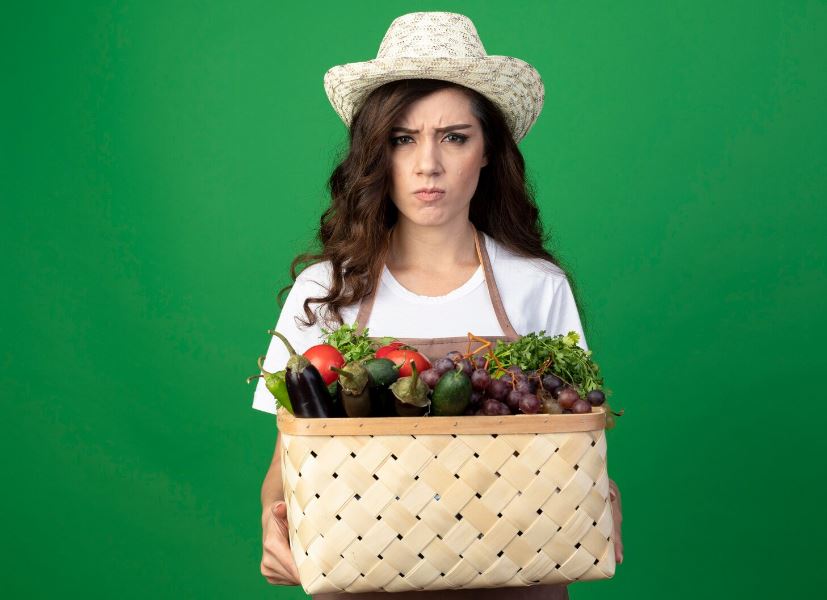
If questioned, the majority of people seem to know that this is wasteful and most likely incorrect. However, the behavior continues, and the research that explains why is more unsettling than most discussions about food waste. Research from the Singapore Management University and the Schulich School of Business in Canada has revealed an unsettling conclusion: people believe that purchasing ugly produce will lower their self-esteem. It’s not just that the peculiar-looking pepper doesn’t seem as tasty. It seems that some customers feel worse about themselves after buying it.
It takes about 50 liters of water to grow one orange. Whether the orange is consumed or composted, the land, labor, water, and transportation are all still expended, so discarding it due to a slight skin discoloration is an inaccurate resource calculation. Additionally, food waste produces methane when it ends up in a landfill, making it one of the major sources of greenhouse gas emissions that is rarely given the attention it most definitely deserves.
The increasing amount of research indicating the bias is neither fixed nor natural is what has changed in recent years. According to research published in Frontiers in Sustainable Food Systems, consumer preferences changed, sometimes significantly, when ugly produce was given “naturalness cues”—signals that linked its flawed appearance to organic, natural growth. The deformity ceased to be perceived as a flaw. It began to read as proof. Researchers at UBC’s Sauder School of Business discovered that merely designating produce as “ugly” could boost sales by redefining the imperfection as a benefit rather than a drawback.
Additionally, consumers who have firsthand experience growing their own food react to misshapen produce very differently, which may be the most practically useful finding in this body of research. When food comes from the ground instead of a distribution center, they tend to find it more normal, more acceptable, and more representative of what food actually looks like. It’s possible that a generation of consumers whose perception of what a tomato should look has been formed solely by supermarket displays rather than by anything that grows, as a result of their estrangement from agriculture—from real orchards and fields.
It’s difficult to ignore the fact that the food companies and retailers who enforce the most stringent cosmetic standards also stand to gain the most from the resulting waste. At the farm gate, farmers absorb losses. Contracts are lost by smaller suppliers. Everyone is affected by the diffuse environmental cost. In the meantime, the aesthetic standard is justified as a consumer preference, which has been significantly shaped by the industry enforcing it, according to the research.
It’s unclear if the tide is actually turning. Ugly produce lines have been introduced by some retailers. There are customers in the US, Australia, and the UK for subscription services that sell fruit and vegetables that are rejected due to their appearance. However, these continue to be specialized businesses operating at the periphery of a system that is still predicated on the notion that customers seek perfection. Unharvested and unreported, the peculiarly shaped tomato still ends up in a field somewhere.
FAQ SECTION
Is rejected produce safe to eat? Yes — it is nutritionally identical to supermarket produce and meets the same food safety standards.
Why do supermarkets reject misshapen produce? They follow strict cosmetic grading rules around size, shape, and colour that have nothing to do with edibility.
Does ugly produce taste different? No — naturally ripened irregular produce can often be more flavourful than visually perfect alternatives.
How much produce is wasted due to cosmetic standards? Over 50 million tonnes annually in Europe alone are discarded purely for cosmetic reasons.
Where can you buy ugly produce? Through specialist services like Oddbox in the UK, and select supermarket sustainability ranges.
Does buying ugly produce help the environment? Yes — it prevents edible food from rotting in landfill and generating harmful methane emissions.
