

Hundreds of glowing rectangles rise into the air like a digital dawn as the lights go out and the crowd roars. Everybody is filming. Everybody is capturing. It’s also possible that no one is genuinely watching the show somewhere in that forest of raised phones. The moment is both abandoned and preserved at the same time.
This isn’t merely nostalgia or a generational grievance disguised as philosophy. Underneath it all is true psychology. Dr. Linda Henkel of Fairfield University led students through a museum and asked them to take pictures of some items while merely observing others in a study that still merits much greater public attention. Their ability to recall photographed objects was noticeably reduced the following day. Henkel referred to it as the “photo-taking impairment effect.” Sensing that memory storage was being handled by an external device, the brain discreetly left the task. She pointed out that the enemy of memory is divided attention.
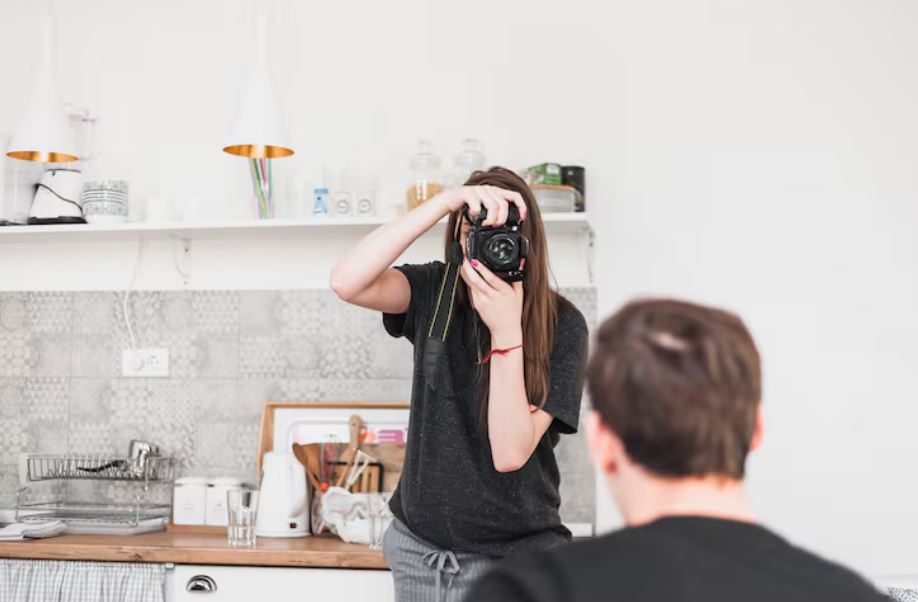
This is strange because we take pictures primarily out of fear of forgetting. It is a genuine impulse. A sunset that catches you off guard, a meal so unexpectedly good it feels rude not to document it, a moment with someone you love. Reaching for your phone is not cynical. However, the mechanism now activates on its own, before the experience has had a chance to settle. Before the eyes have fully adapted to what is in front of them, the shutter clicks.
People’s perceptions of photography were subtly altered by the transition from film to digital, and not just because the price dropped to almost nothing. A certain discipline was imposed by film. Each roll had thirty-six exposures, which equated to thirty-six choices, each of which carried a tiny financial burden. There was more to that friction than just a burden. It led to the practice of waiting for something to truly happen and looking before shooting. Digital eliminated both the expense and a particular level of care. The spray-and-pray method, thousands of photos accumulating on hard drives and cloud servers, substituting volume for thoughtfulness, creates archives that no one will ever thoroughly examine.
Then social media emerged, completely altering the motivation. Taking pictures to preserve memories is one thing. It’s different to use photography to demonstrate, perform, and convey a life well-lived to an audience that might not be paying much attention in the first place. What seems intuitively true—that younger generations, in particular, use photography as a means of communication rather than personal record-keeping—has been largely supported by research. The picture does not serve as a memory aid. It’s a message. This implies that the event itself has turned into a prop for content creation in a loose sense. It’s difficult to ignore the arrangement’s subtle melancholy.
All of this does not support giving up on the camera. At its best, photography is a remarkable act of attention that slows one down and compels one to focus on composition, light, and the precise quality of a moment. Photography is not the problem. The reflex, the automatic reach, and the way the phone comes out before the eyes have even focused are the problems. A different relationship with the experience results from spending five or ten minutes just being somewhere before touching a camera, letting a place reveal itself instead of framing it right away. frequently a longer-lasting one.
One form of seeing doesn’t require a gadget. All it asks is that you remain motionless long enough for something to register, such as the unique way afternoon light strikes a stone wall, the sound of a city block establishing its rhythm on a Tuesday morning, or a face in conversation that merits proper memory rather than careless archiving. These items are not visible in a thumbnail. In the instant of encounter, they either survive or completely vanish.
The pictures that are worth preserving are typically those that were taken after that kind of searching has already taken place. The others usually sit on servers and age in the dark.
FAQs
Q: Does taking photos hurt your memory?
A: Yes — research shows the brain stops encoding a moment naturally once it assumes the camera is handling it.
Q: How many photos is too many?
A: When you’re retaking the same shot repeatedly and barely looking up, you’ve stopped experiencing and started collecting.
Q: Why do we photograph so much more than we used to?
A: Digital photography and smartphones made it essentially free and effortless, removing the friction that once forced people to think before shooting.
Q: Can taking fewer photos actually improve a trip?
A: Most people who try it report feeling more present, more relaxed, and surprisingly, remembering more.
Q: Is social media changing why we take pictures?
A: Significantly — most photos today are taken to communicate or perform, not to remember.
