

Maeve Gilmore created a gentle oil painting of a bowl of pears around 1949 while giving birth to her daughter. She just went to her painting room and got to work. At first glance, the image appears unremarkable. Perhaps a bit domestic. Silent. However, understanding the circumstances surrounding its creation alters every aspect of it. In the same way that some rooms retain the memory of what happened there long after the furniture has been removed, the canvas contains a birth that is both invisible and permanent.
The long, contentious history of the genre revolves around this tension between what a still life seems to be and what it actually carries. For centuries, still life was positioned at the bottom of a formal hierarchy by critics and institutions. The 17th-century ranking of the French Academy was straightforward: still life was close to the floor, religious painting and history were at the top, and portraits were just below. The idea was that there was no real skill needed to make an inanimate fruit bowl. A lemon could be painted by anyone.
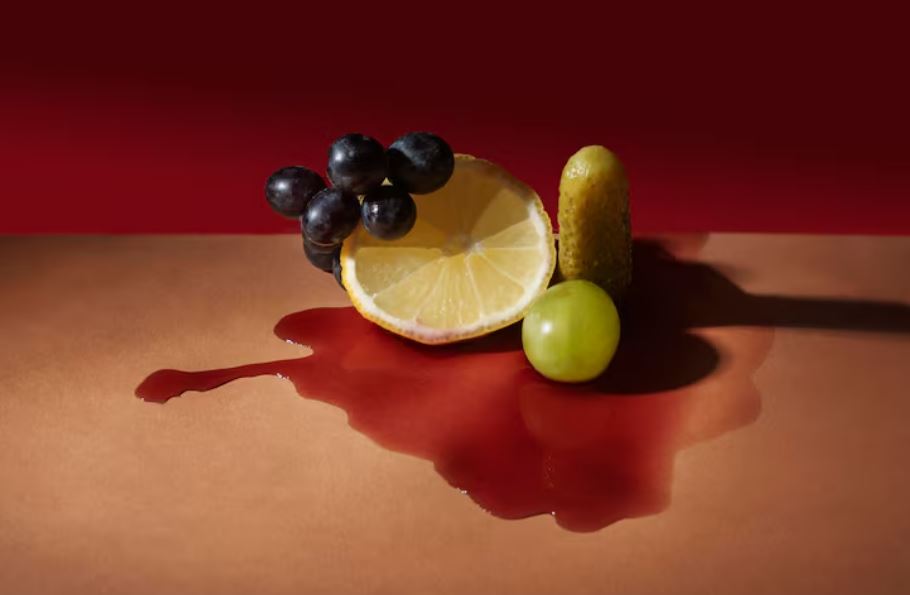
The freedom that came with being ignored was what that dismissal overlooked, or maybe understood too well. Many women artists, in particular, turned to still life painting out of necessity rather than choice because they were largely excluded from life drawing classes and prohibited from studying the human form that elevated “serious” painting. Then, while operating under that restriction, an intriguing development occurred. The genre developed into a venue for precisely the kinds of subtle subversion, biographical detail, and coded meaning that institutional painting was unable to support.
The oranges and tea cups in the paintings of early 20th-century female artists, such as Vanessa Bell and Gwen John, were described by Rebecca Birrell as “histories of women’s lives compiled by way of the objects that bore witness.” It’s a phrase that sticks with you. Things serve as witnesses. A teacup isn’t just a teacup; it’s a life arranged on a surface and left there, just waiting for someone to take a close enough look.
However, the custom extends beyond intimate domestic relationships. Centuries before feminism became a topic of discussion, Dutch Golden Age painters were incorporating memento mori into their works, such as skulls hidden behind goblets, low-burning candles, and fruit that was already starting to turn. These were paintings about abundance disguised as paintings about mortality. They were commissioned by the affluent merchant class, perhaps unaware of the criticism ingrained in the picture. They might have liked it that way.
Looking back, it is truly surprising how the genre has consistently drawn artists who want to express something that is difficult to express directly. After seeing a mastectomy, Lee Miller was disturbed and took a picture of a severed breast on a dinner plate. The picture is a still life in the most brutal sense, clinical and terrifying at the same time. Sam Taylor-Johnson captured a time-lapse video of fruit breaking down in real time, condensing the entire decay process into a few silent minutes. The still life as a delicate, ornamental exercise is not appropriate for either piece. Both are a perfect fit for its real history.
Artists of today have gone even farther. Glistening egg yolks, half-chewed cherry stones, and fresh flowers are combined in photographs by Maisie Cousins to create arrangements that are both delicious and slightly repulsive. The idea is probably to pull the viewer in two directions at once. In a 2022 exhibition, Katy Stubbs contributed a ceramic decapitated budgerigar. This darkly humorous piece takes the genre’s long-standing obsession with death and makes it seem almost comical.
Looking at all of this, it seems like the apparent stillness of the still life was always the joke. The genre that continued to move was the one that was immobile. It turned out that the low form, which was incapable of telling stories, had been telling stories all along through objects, absence, and the kind of meaning that builds up gradually instead of making an announcement.
It’s difficult not to believe that dismissal was the best thing that could have happened to this body of work as it has developed over centuries. When the still life was left unattended on the periphery, it became truly free to convey existential anxiety, political rage, biological truth, and personal grief within pictures that at first glance appeared to be a bowl of fruit.
