Close Menu
Tim Smyth ArtTim Smyth Art
    Facebook X (Twitter) Instagram
    Facebook X (Twitter) Instagram
    Tim Smyth ArtTim Smyth Art
    Subscribe
    • Home
    • Art Of Photography
    • Art and Culture
    • Latest
    • Celebrities
    • News
    • Privacy Policy
    • Contact US
    • Terms Of Service
    • About Us
    Tim Smyth ArtTim Smyth Art
    Home » The Quiet Revolution Behind the Ugly Carrot in Your Kitchen
    World

    The Quiet Revolution Behind the Ugly Carrot in Your Kitchen

    Georgia WestonBy Georgia WestonMay 5, 2026No Comments4 Mins Read
    Facebook Twitter Pinterest LinkedIn Tumblr Email
    Share
    Facebook Twitter LinkedIn Pinterest Email

    You hardly ever see a certain type of carrot in a supermarket. It’s the two-legged creature that appears to have attempted to move away from the ground. Farmers are familiar with it. Customers typically don’t because that carrot was removed, put aside, and sent somewhere quieter at some point in the supply chain, between the field and the produce aisle. That location was frequently a landfill for decades. Slowly and somewhat awkwardly, that is beginning to change, and the change speaks to our current eating habits.

    When you enter a central Florida Walmart, you may notice a bin of apples that seem a little strange. They may be freckled, smaller than normal, or shaped like they were squeezed by an impatient hand. Building on an ugly potato program in Britain, the chain started carrying these in 300 stores back in 2016. For a company with over 4,000 produce-selling locations, this is a minor change, but when Walmart shifts its direction, the rest of the industry usually follows. More than half of its US sales are made up of groceries. The growers quickly notice when the buyers there begin to accept bumpy apples.

    It is not surprising that Europe arrived earlier. The EU has committed to halving food waste by the mid-2030s, and Britain has been running its “Love Food Hate Waste” campaign at least since 2007. WeFood is a store in Copenhagen that only sells cheap produce that has gone bad or is past its expiration date. It doesn’t look like a charity bin when you walk past its shelves. It depicts a somewhat disorganized, somewhat less expensive grocery store, which is essentially what it is.
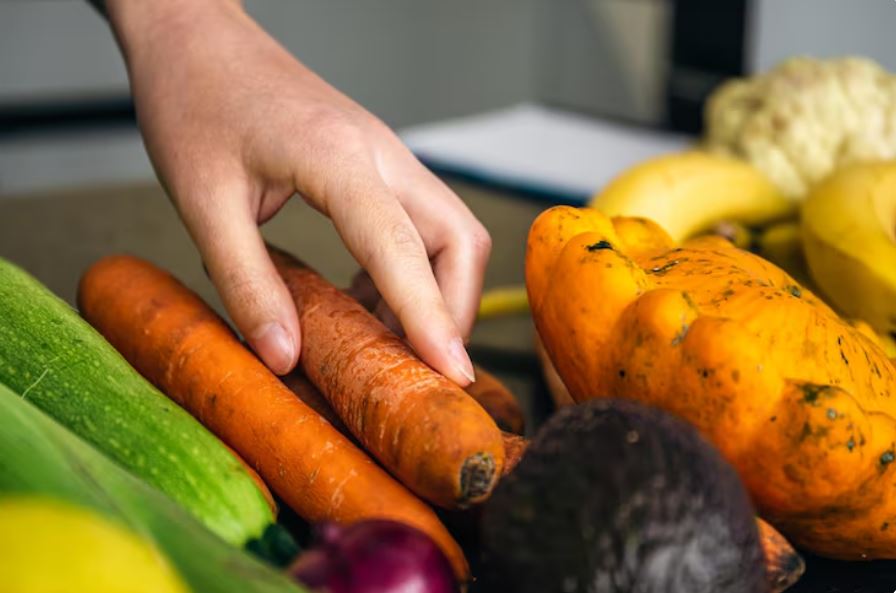
    You hardly ever see a certain type of carrot in a supermarket. It's the two-legged creature that appears to have attempted to move away from the ground. Farmers are familiar with it. Customers typically don't because that carrot was removed, put aside, and sent somewhere quieter at some point in the supply chain, between the field and the produce aisle. That location was frequently a landfill for decades. Slowly and somewhat awkwardly, that is beginning to change, and the change speaks to our current eating habits.

When you enter a central Florida Walmart, you may notice a bin of apples that seem a little strange. They may be freckled, smaller than normal, or shaped like they were squeezed by an impatient hand. Building on an ugly potato program in Britain, the chain started carrying these in 300 stores back in 2016. For a company with over 4,000 produce-selling locations, this is a minor change, but when Walmart shifts its direction, the rest of the industry usually follows. More than half of its US sales are made up of groceries. The growers quickly notice when the buyers there begin to accept bumpy apples.

It is not surprising that Europe arrived earlier. The EU has committed to halving food waste by the mid-2030s, and Britain has been running its "Love Food Hate Waste" campaign at least since 2007. WeFood is a store in Copenhagen that only sells cheap produce that has gone bad or is past its expiration date. It doesn't look like a charity bin when you walk past its shelves. It depicts a somewhat disorganized, somewhat less expensive grocery store, which is essentially what it is.

All of this is based on blunt numbers. According to the Natural Resources Defense Council, 40% of food produced in the United States is never consumed. More than half of fruits and vegetables are lost between farm and fork, making them the worst. According to WRAP data, households in the UK alone discard roughly 4.5 million tonnes of edible food annually, with potatoes topping the list. A very British detail is that bread and milk come next.

The food isn't the only deeper issue. It's everything that was involved. Land, labor, diesel, fertilizer, and water. All of that is dragged into the trash can by a discarded zucchini. Additionally, it releases methane, which is about 25 times more potent than carbon dioxide over a century, as soon as it lands in a landfill. According to the most reliable estimates, 8–10% of greenhouse gas emissions worldwide are caused by food waste. That is many times the footprint of aviation, a fact that still seems to shock people.

Some people are skeptical, and they have a valid point. Produce that is truly ugly is rarely thrown out completely, according to critics. Jam is made from strawberries. Famously, in 1986, misshapen carrots were transformed into baby carrots—a marketing trick that subtly absorbed a mountain of waste. The food industry already routes a large amount of produce that is rejected for appearance into other products, as the Produce Marketing Association has long pointed out. So, is the problem being solved by the wonky vegetable movement, or is it just being rearranged?

Most likely a combination of the two. Companies like Oddbox in the UK and Hungry Harvest in the Mid-Atlantic have created legitimate businesses out of the void, delivering weekly boxes of rescued produce that, according to Evan Lutz, the CEO of Hungry Harvest, frequently appear completely normal. Just as important as the logistics is the change in consumer attitudes. A growing number of people believe that flavor and freshness should take precedence over symmetry. It's still unclear if that perception will endure during a recession, when consumers may turn to whatever is most affordable and attractive. The bumpy carrot is currently having a moment. It's difficult not to support it.
    The Future of Food Is Imperfect

    All of this is based on blunt numbers. According to the Natural Resources Defense Council, 40% of food produced in the United States is never consumed. More than half of fruits and vegetables are lost between farm and fork, making them the worst. According to WRAP data, households in the UK alone discard roughly 4.5 million tonnes of edible food annually, with potatoes topping the list. A very British detail is that bread and milk come next.

    The food isn’t the only deeper issue. It’s everything that was involved. Land, labor, diesel, fertilizer, and water. All of that is dragged into the trash can by a discarded zucchini. Additionally, it releases methane, which is about 25 times more potent than carbon dioxide over a century, as soon as it lands in a landfill. According to the most reliable estimates, 8–10% of greenhouse gas emissions worldwide are caused by food waste. That is many times the footprint of aviation, a fact that still seems to shock people.

    Some people are skeptical, and they have a valid point. Produce that is truly ugly is rarely thrown out completely, according to critics. Jam is made from strawberries. Famously, in 1986, misshapen carrots were transformed into baby carrots—a marketing trick that subtly absorbed a mountain of waste. The food industry already routes a large amount of produce that is rejected for appearance into other products, as the Produce Marketing Association has long pointed out. So, is the problem being solved by the wonky vegetable movement, or is it just being rearranged?

    Most likely a combination of the two. Companies like Oddbox in the UK and Hungry Harvest in the Mid-Atlantic have created legitimate businesses out of the void, delivering weekly boxes of rescued produce that, according to Evan Lutz, the CEO of Hungry Harvest, frequently appear completely normal. Just as important as the logistics is the change in consumer attitudes. A growing number of people believe that flavor and freshness should take precedence over symmetry. It’s still unclear if that perception will endure during a recession, when consumers may turn to whatever is most affordable and attractive. The bumpy carrot is currently having a moment. It’s difficult not to support it.

    The Future of Food Is Imperfect
    Share. Facebook Twitter Pinterest LinkedIn Tumblr Email
    Georgia Weston

    Georgia Weston writes about migration stories, photography, and the changing aesthetics of contemporary cities. She also writes about the politics of public space, visual storytelling, and modern culture. Her research examines how deeper social structures are reflected in everyday settings, food systems, and art. She gives stories at the nexus of image and society a sharp yet measured voice, with an emphasis on documentary practices and cultural identity.

    Related Posts

    The Instagrammable City – Are We Designing for Humans or Algorithms?

    March 29, 2026

    From Battersea to Barbican – The Battle for Britain’s Visual Identity

    March 28, 2026

    Why Grey Cities Are Dying — And Who Is Repainting Them

    March 16, 2026

    Comments are closed.

    Art and Culture

    The Museum Without Walls: Public Art in the Metaverse

    By Ellis StevensonMay 25, 20260

    When you ask Matt Mullican where his new museum is, he hesitates. It’s a fair…

    Synthetic Food, Synthetic Images: The Age of Artificial Authenticity

    May 25, 2026

    Can Algorithms Understand Imperfection?

    May 25, 2026

    The Death of Documentary – Why the Genre That Defined Truth Is Losing Its Audience

    May 22, 2026

    The Quiet Erasure – When AI Learns to Photograph Absence

    May 21, 2026

    Searching for the Perfect Edge in Photography – Why the Frame’s Border Matters More Than You Think

    May 21, 2026

    Walking Away – The Art of Letting the Public Own the Work

    May 20, 2026

    The Myth of the Small Piece – Why Some Artists Refuse Intimacy

    May 20, 2026

    Making Work People Feel They Belong Is Harder Than Most Bosses Admit

    May 18, 2026

    The Manual Future – Why Artists Are Resisting Automation

    May 18, 2026

    Why Big Work Matters in a Shrinking Attention Span Era

    May 15, 2026

    From Circus Bloodlines to Urban Installations – The Nomadic Creative

    May 15, 2026

    The Studio as Sanctuary in an Age of Digital Noise – Why Artists Are Building Walls Against the Algorithm

    May 13, 2026

    Why Obsession Is the Artist’s Most Dangerous Tool

    May 13, 2026

    Paint by Numbers – The Hidden Discipline Behind Monumental Chaos

    May 11, 2026
    Facebook X (Twitter) Instagram Pinterest
    © 2026 ThemeSphere. Designed by ThemeSphere.

    Type above and press Enter to search. Press Esc to cancel.