

The face and armless torso of nine-year-old Mahmoud Ajjour gazed out at commuters hurrying past with their coffee cups and briefcases somewhere in the Barcelona metro, on the walls flanking an ascending escalator. The picture, which was captured by Gazan photographer Samar Abu Elouf for The New York Times, won the 2025 World Press Photo of the Year award. It depicts a child injured in an airstrike in a truly moving and devastating way. It was worthy of praise. However, seeing it repurposed as exhibition advertising on a metro wall raises an issue that the photojournalism community has been debating for years without providing a definitive response: when does bearing witness turn into something completely different?
In 2026, this is the main conflict in refugee photography, and it is more difficult than it has ever been. Images of the greatest suffering are typically the ones that move people, inspire donations, change policy discussions, and fill gallery walls. The face of a child. A packed dinghy. A family traveling through the dark. These images have a real impact on the world. For the organizations and people who publish them, they also bring in money, prestige, and career advancement. It is uncomfortable to hold both of those truths at the same time, and the industry hasn’t always been willing to try.
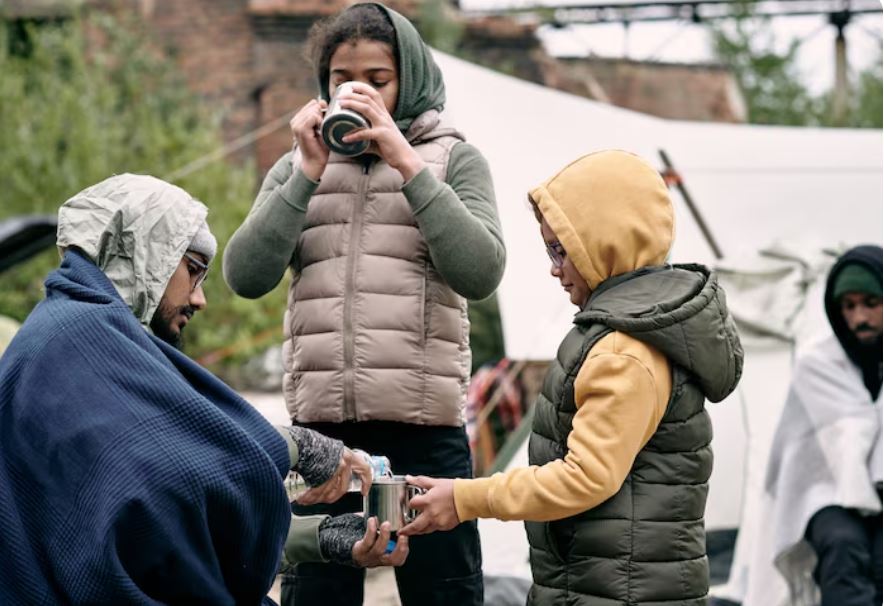
The founder of the Photography Ethics Center, Dr. Savannah Dodd, has made a distinction that merits greater publicity. She contends that permission to be photographed is not the same as permission for an image to show up three years later in a nation the subject has never been to on a billboard, newsfeed, or traveling exhibition. The majority of guidelines still fall short in this area, which is where many ethics truly exist—between the moment of capture and the image’s lengthy afterlife. Photographers must take into account identity protection for refugees and asylum seekers, especially children, according to the World Press Photo’s 2026 code of ethics, which carefully addresses consent. It’s a significant standard. It’s a different story when an image enters what some researchers now refer to as its “digital afterlife.”
The issue of decontextualization is real and getting worse. Within hours of being published, an image of a Syrian family that was carefully and voluntarily captured in a Sicilian reception center can be cropped, have its caption removed, and go viral on websites that promote the very xenophobia that the original photographer was attempting to combat. Instead of viewing a caption as a one-time event, the Ethical Journalism Network has pushed editorial offices to consistently add context. As soon as an image leaves a news outlet’s own channels, that standard actually deteriorates. No caption policy, no matter how strict, may be able to endure contact with the internet as it exists today.
There is a more subdued tradition of refugee photography that may produce more genuine work but seldom takes first place in the major competitions. A helpful example is the Life After Hell series by Marco Panzetti, which was produced in five Italian refugee centers. Not because the suffering wasn’t genuine, but because he believed it reduced the subjects of his photographs to their lowest points, Panzetti purposefully chose to discard images of extreme distress. One of the most striking pictures in the series is a silhouette of a pregnant woman standing in front of a Red Cross tent, her identity totally hidden by the composition of red fabric and shadow. It conveys the narrative without revealing the individual. That seems like a significant difference.
Humanitarian organizations themselves are the subject of the more difficult and difficult-to-answer question. According to a 2026 study on NGO fundraising during the Syrian crisis, aid organizations frequently used pictures of refugees in the most vulnerable situations to entice donors, frequently treating the subjects more like fundraising tools than like human beings with agency and dignity. According to the Red Cross code of conduct, victims of disasters should be portrayed as human beings with dignity rather than as defenseless objects. There is still a big difference between that idea and standard procedure. There is a perception that organizations that create more emotionally extreme imagery are essentially rewarded by the competitive donor market, creating pressure that is beyond the scope of ethical guidelines.
Refugee photography will continue, and it ought to. The visual documentation of displacement is important from a historical, political, and human standpoint. The debate over who owns that record, who makes money off of it, and whether the individuals in the picture ever had a real voice is evolving, albeit slowly and not without opposition. Consent that is obtained under duress, in a language that the subject hardly speaks, and without providing an explanation of the image’s intended destination is not truly consent. The industry is aware of this in 2026. Whether knowing it is sufficient is the question.
