

The majority of people will never see this particular photo. It was taken in an unglamorous setting, such as a kitchen table in the middle of a fight, a waiting room, or a roadside. The light was not set up by anyone. No one double-checked the frame. Whoever took the picture most likely didn’t consider their personal brand at the time because it was just a person, a moment, and a camera. Finding that kind of image is getting more difficult, not because cameras have gotten worse, but rather because the platforms we share them on have drastically altered what photographers believe they should be doing.
The foundation of documentary photography was a straightforward, almost brutal idea: go somewhere, see what’s really going on, and return with evidence. Its origins were in social anthropology, journalism, and evidence-based activism. When Dorothea Lange took pictures of Florence Owens Thompson, she wasn’t staging anything. She was testifying. Because there was actual discomfort in that camp, the discomfort in those pictures is real. The weather in the picture was the same as the subject.
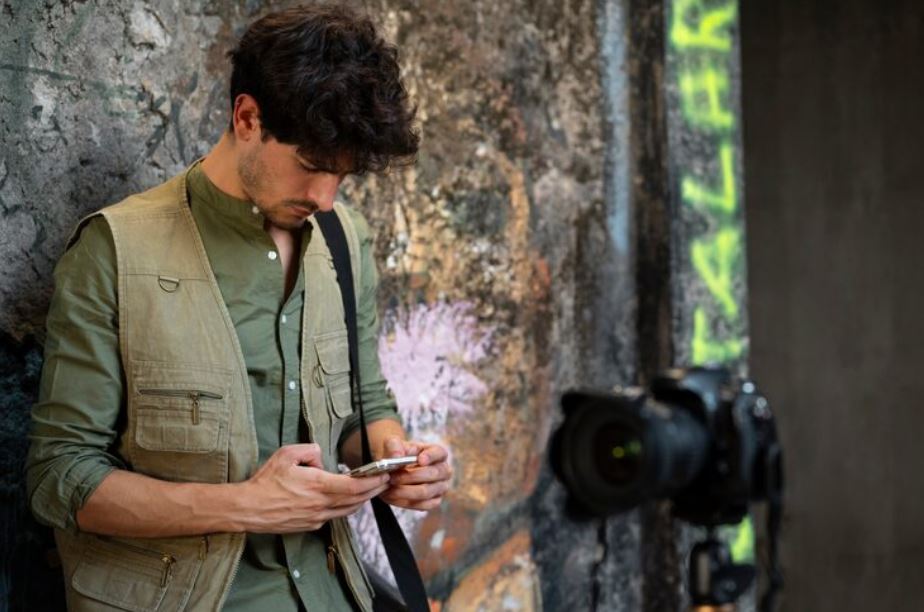
Instagram entered the picture and subtly damaged that partnership. It only made being honest inconvenient, not illegal. Consistency, aesthetic coherence, and the appearance of a well-curated life are all rewarded by the platform. Once spending hours waiting for a single unguarded moment, photographers now find themselves expending the same amount of energy considering hashtags, captions, and whether a given image aligns with the visual identity they have been developing for the past three years. The waiting seems to have shifted inward, away from the outside world and toward the feed.
Researchers studying photojournalists on Instagram have discovered something called performed authenticity, which is a type of controlled sincerity in which photographers present themselves as unvarnished, unfiltered, and documentary-inspired while meticulously controlling every aspect of that presentation. Instead of being a chemical reality, film grain is now an aesthetic choice. Spontaneity is indicated by the slightly crooked frame. Even after twelve edits, the caption about how challenging this assignment was serves as intimacy. It’s not quite dishonesty. However, it’s also not entirely accurate.
Erving Goffman’s long-held theory that people curate their identities to conform to social norms now seems almost prophetic. On a self-branding platform, the question becomes, “How does this witness moment fit your brand?” rather than, “What did you witness?” Two well-known photojournalists who have been the subject of scholarly research on this particular conflict, Ed Kashi and Sebastian Rich, can maintain both identities at the same time: the journalist dedicated to factual reporting and the Instagrammer portraying a genuine, prominent self. It’s a challenging balance. It’s still genuinely unclear if it’s sustainable.
It’s difficult to ignore how mainstream aesthetic culture has assimilated the visual vocabulary of unpolished, challenging documentary work. The motion blur, the washed-out tones, and the composition’s apparent accidentality are all now presets. Once an inadvertent consequence of working quickly under pressure, this style can now be applied with just one tap. This is not without its own peculiar irony: a form that was once characterized by its refusal to be beautiful has, in some cases, deliberately become beautiful.
All of this does not imply that documentary photography is extinct. The best documentary work being produced at the moment may be precisely in response to all of this, with photographers subtly withdrawing from the performance and going back to slower work that isn’t meant to be photographed for a feed. Above all, Instagram revealed that authenticity was never a given. It needed to be intentional. There was always a choice with the camera. Now, the question is whether photographers are making that decision for the audience waiting behind the screen or for the world in front of them.
FAQs
1. What did Instagram change about documentary photography?
It shifted photographers’ focus from observing the world to performing for audiences.
2. What is “performed authenticity” in photography?
It’s managed sincerity — carefully staged rawness designed to appear genuinely unfiltered.
3. Did Instagram make documentary photography dishonest?
Not outright dishonest, but it made honesty commercially inconvenient for photographers.
4. Is documentary photography still relevant today?
Yes — the best work now often deliberately resists social media’s aesthetic demands.
5. What is the core tension Instagram created for photojournalists?
Factual documentary ethics constantly conflict with self-branding’s performative authenticity requirements.
