

There’s a picture from The Last Resort that, once you see it, stops you cold. On a crowded beach, a woman wearing a floral swimsuit eats chips from a paper wrapper while the sea glitters in the distance. She was surrounded by bodies crammed together, noise, litter, and the remnants of a resort that was making a valiant effort to avoid appearing dilapidated. It is almost unbearably vivid—too bright, too close, and too honest—because Martin Parr used a daylight flash to capture it in saturated color. It remains one of the most talked-about images in the history of British documentaries.
The Last Resort was filmed in New Brighton, a Liverpool coastal suburb, between 1983 and 1985 after Parr moved there and was instantly drawn to what he called its “litter and energy.” The establishment was having difficulties. With a middle-class Surrey upbringing that had never involved chip shops or run-down seaside resorts, Parr found himself genuinely, rather than disdainfully, by the litter-strewn, concrete promenade, which seemed to represent the decline of the British economy. That distinction is important. Later, detractors would debate whether he was celebrating or exploiting his subjects. Cleanliness is probably not the answer.
In contrast to the conventional black-and-white format then used for serious documentaries, Parr shot the series in color. When daylight flash was added, the pictures became, in his own words, “hyper real.” American photographers Stephen Shore and William Eggleston served as some inspiration for the striking use of color. “They gave me confidence to know that colour can be serious too,” Parr replied. British photography might have reached color much later and with much more caution if Shore and Eggleston hadn’t cleared ground on the other side of the Atlantic.
The Last Resort sparked controversy when it debuted at the Serpentine Gallery in 1986. The series was interpreted by critics as a political statement denouncing Margaret Thatcher’s economic policies. The pictures were compared by one critic to a “clammy, claustrophobic nightmare world.” Parr was accused by another of making the working class an easy target for a more affluent audience. It’s worth considering whether those readings were fair or merely exposed the critics. The Serpentine exhibition proved to be a pivotal point in the development of both Parr’s career and documentary photography in Britain. Parr’s photographs frequently revolve around this contrast between the lived-out dream and physical reality.
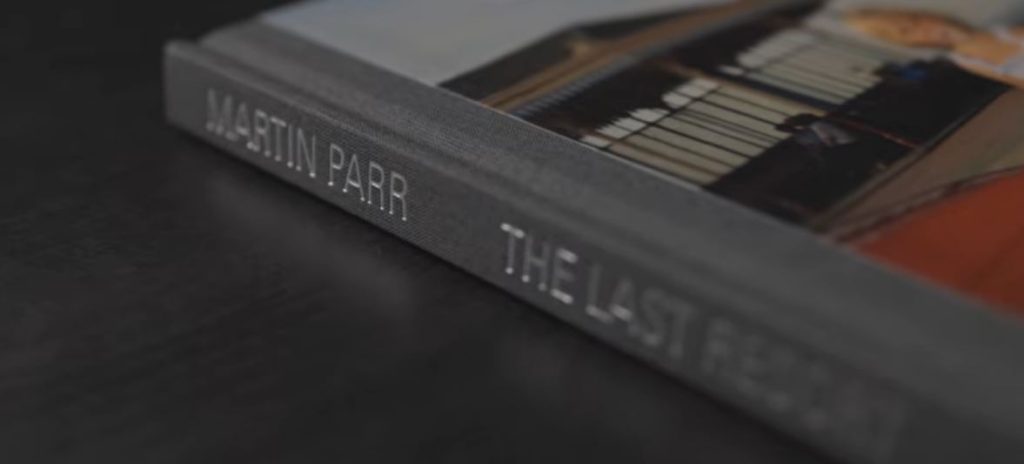
Parr struggled to find a commercial publisher at the time, so he self-published the first book under his own Promenade Press using a small Arts Council grant. Just that fact is worth pausing for. No commercial publisher wanted to touch the work that is now regarded as a cornerstone of British photography. Looking back, it seems as though the establishment knew right away that the pictures were provocative and opted for avoidance rather than interaction.
After forty years, the pictures seem more like a record than a provocation. The Martin Parr Foundation began 2026 with an exhibition of the renowned series, which ran through May, in remembrance of Parr after his death on December 6, 2025. The director of the foundation stated that one of his groundbreaking bodies of work can be reintroduced to visitors through the exhibition. His wife, Susie Parr, remembered the series with the nuanced pride of someone who saw it happen in real time: “The bold color was a shock to me because I really liked Martin’s more elegiac black and white work in Hebden Bridge and Ireland. However, I could tell it was a remarkable body of work.”
The controversy isn’t really what keeps The Last Resort going. It’s the particularity. You can practically smell the sunscreen, vinegar, gasoline, and salt in those pictures. Due to the exceptionally hot summers of 1983 and 1984, New Brighton saw an unusually high number of visitors, making it the busiest and liveliest resort. Parr showed up with precisely the right eye at precisely the right time. Months before he passed away, he finished his final commission, which documented a Wiltshire village complete with prize potatoes, scarecrow festivals, and a vicar wearing a Union Jack bowler hat. Different topic, same instinct: keep your eyes open and look for the unusual within the commonplace.
FAQs
Q1. Where was The Last Resort photographed?
New Brighton, a coastal suburb of Liverpool, between 1983 and 1985.
Q2. Why did Martin Parr shoot in colour rather than black and white?
He was inspired by American photographers Shore and Eggleston to treat colour seriously.
Q3. How was The Last Resort first published?
Parr self-published it under his own Promenade Press in 1986.
Q4. How did critics respond when the series debuted at the Serpentine Gallery?
It caused public outcry, with many reading it as anti-Thatcher political commentary.
Q5. What was Martin Parr’s final photography commission before his death?
Documenting village life in Lacock, Wiltshire, completed months before he died in December 2025.
