Close Menu
Tim Smyth ArtTim Smyth Art
    Facebook X (Twitter) Instagram
    Facebook X (Twitter) Instagram
    Tim Smyth ArtTim Smyth Art
    Subscribe
    • Home
    • Art Of Photography
    • Art and Culture
    • Latest
    • Celebrities
    • News
    • Privacy Policy
    • Contact US
    • Terms Of Service
    • About Us
    Tim Smyth ArtTim Smyth Art
    Home ยป The Bristol Photographer Whose Subjects Range From Discarded Food to Displaced People
    Art Of Photography

    The Bristol Photographer Whose Subjects Range From Discarded Food to Displaced People

    Georgia WestonBy Georgia WestonJune 25, 2026No Comments4 Mins Read
    Facebook Twitter Pinterest LinkedIn Tumblr Email
    Share
    Facebook Twitter LinkedIn Pinterest Email

    Chris Hoare was raised close to Southmead, on Bristol’s northern edge. This area of the city isn’t shown on tourist maps, isn’t featured in weekend supplements, and isn’t particularly appealing to young professionals moving from London in search of less expensive housing and a little edge. It is nearly entirely working class, physically isolated from the rest of the city by hills and customs, and it has influenced Hoare’s perspective throughout his career. Not what Bristol wants you to see. at the remnants of it.

    The fullest manifestation of that instinct to date can be found in his 2024 photobook Seven Hills. It spans about five years of work, the kind of methodical, patient documentary approach that seems more and more uncommon in this day and age of short attention spans and disposable photos. Hoare covers a wide range of topics, from abandoned food that is rotting at market edges to displaced people who are sleeping in doorways close to the city center. At first glance, there isn’t a clear connection between all of this. It has to do with what a city decides not to examine.
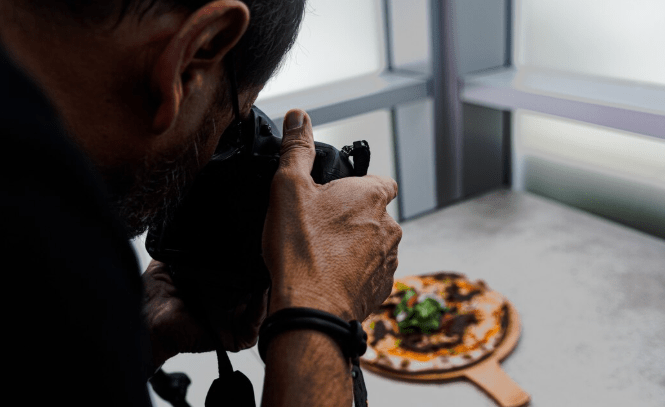
    The Bristol Photographer Whose Subjects Range From Discarded Food to Displaced People
    The Bristol Photographer Whose Subjects Range From Discarded Food to Displaced People

    On June 8, 2020, the morning after Edward Colston’s statue was removed from its plinth and rolled into Bristol Harbour, the book took on a new significance. The previous day, Hoare had attended the Black Lives Matter protest, participated in a nine-minute kneel in support of George Floyd, and then left for home. He went back outside when his phone began to ring, not to record the actual moment but rather its aftermath. In Seven Hills, the empty plinth is seen tilted on its side. The entire project is about absence as much as presence, about what remains after something has been eliminated, disregarded, or just thrown out, so it fits perfectly.

    Hoare seems to be drawn to conflict. Not the dramatic kind, like the burning barricade or the yelling mob, but the more subdued conflict between the city’s perception of itself and its true nature. Bristol actively promotes its independent culture, street art, music, and food scene. And that’s all real. However, Southmead also does. The lines at the food bank also do. Additionally, the city absorbs the stories of the migrants without fully acknowledging them. While no city may be truthful about its own inconsistencies, Bristol appears to have a particularly large discrepancy between its reputation and reality.

    The specificity of Hoare’s writing is what makes it resonate with you. He’s not saying big things. He’s taking pictures of a specific face outside a specific building or a specific hill at a specific time of day. The distinction between a concept and an encounter is what makes documentary photography so vital. From the Magnum tradition to the astute community work that has taken place in Bristol for decades, the photographers who have done this successfully have all realized that abstraction kills the form. Hoare appears to comprehend it as well.

    It’s difficult to ignore the fact that his sensibility, developed in Southmead and honed by witnessing a city change around him, results in something more unsettling and truthful than the majority of what passes for documentary work in British photography at the moment. He takes pictures of what is thrown away. The people, the cuisine, the histories. He also raises the question of why so much of it initially ended up on the periphery.

    FAQs

    1. What is Chris Hoare’s photobook called?
    Seven Hills, published in 2024.

    2. Where did Chris Hoare grow up?
    Southmead estate, on the northern edge of Bristol.

    3. What subjects does Chris Hoare photograph?
    Discarded food, displaced people, and Bristol’s overlooked working-class communities.

    4. How did the Colston statue event influence his work?
    It deepened his focus on absence, erasure, and what cities choose to ignore.

    5. What makes Hoare’s documentary style distinctive?
    His hyper-specific, slow-burn approach is rooted in personal knowledge of Bristol’s margins.

    Bristol Discarded Food
    Share. Facebook Twitter Pinterest LinkedIn Tumblr Email
    Georgia Weston

      Georgia Weston writes about migration stories, photography, and the changing aesthetics of contemporary cities. She also writes about the politics of public space, visual storytelling, and modern culture. Her research examines how deeper social structures are reflected in everyday settings, food systems, and art. She gives stories at the nexus of image and society a sharp yet measured voice, with an emphasis on documentary practices and cultural identity.

      Related Posts

      The UK and Ireland’s Largest Photo Festival Is Built Entirely Around Socially Engaged Photography

      June 24, 2026

      Why So Many 2026 Photography Festivals Are Centering Migration as a Core Theme

      June 23, 2026

      How AI Entered the Conversation at One of Europe’s Biggest Photography Fairs This Year

      June 23, 2026
      Leave A Reply Cancel Reply

      You must be logged in to post a comment.

      Art Of Photography

      The Bristol Photographer Whose Subjects Range From Discarded Food to Displaced People

      By Georgia WestonJune 25, 20260

      Chris Hoare was raised close to Southmead, on Bristol’s northern edge. This area of the…

      Inside Tim Smyth’s Quiet Obsession With What Gets Left Behind

      June 24, 2026

      The UK and Ireland’s Largest Photo Festival Is Built Entirely Around Socially Engaged Photography

      June 24, 2026

      Why So Many 2026 Photography Festivals Are Centering Migration as a Core Theme

      June 23, 2026

      How AI Entered the Conversation at One of Europe’s Biggest Photography Fairs This Year

      June 23, 2026

      Inside PhotoVogue Festival’s 10th Edition and What It Reveals About Visibility and the Gaze

      June 23, 2026

      Why World Press Photo’s 2026 Long-Term Project Category Is Becoming More Important Than the Single Image

      June 22, 2026

      The Tuscan Hill Town Festival Quietly Becoming a Global Hub for Documentary Storytelling

      June 22, 2026

      Why a Festival About Vulnerability Is Reshaping How Documentary Photography Gets Curated

      June 22, 2026

      Inside Photo London 2026 – What the UK’s Biggest Photography Fair Reveals About Where the Industry Is Heading

      June 19, 2026

      The Last Resort, 40 Years On – Why Martin Parr’s Most Famous Series Still Defines British Photography

      June 19, 2026

      Why Nearly Half of Professional Photographers Still Don’t Know What to Charge for Their Work

      June 19, 2026

      How Tim Smyth Turned a Pile of Misshapen Carrots Into a Yale and MoMA Collection Piece

      June 19, 2026

      The Strange Link Between Tim Smyth’s Carrot Portraits and His Refugee Photography in Spoleto

      June 19, 2026

      Why Tim Smyth Photographs Rejected Vegetables Like Museum Artifacts

      June 19, 2026
      Facebook X (Twitter) Instagram Pinterest
      © 2026 ThemeSphere. Designed by ThemeSphere.

      Type above and press Enter to search. Press Esc to cancel.