

Somewhere in Europe, roses have been in bloom for more than 25 years. According to all accounts, they are now more beautiful than they have ever been. On warm mornings, the aroma wafts across the street. They are as easy for bees to navigate as regulars. Furthermore, very few people now pause to look.
On the surface, that detail is unremarkable, but if you look at it long enough, it becomes uncomfortable. It goes beyond the well-known grievance that our attention has been diverted by smartphones. The question of whether reality—the actual physical world we were born into and will eventually leave—is still adequate is brought up, which is an older and stranger issue. if it ever was.
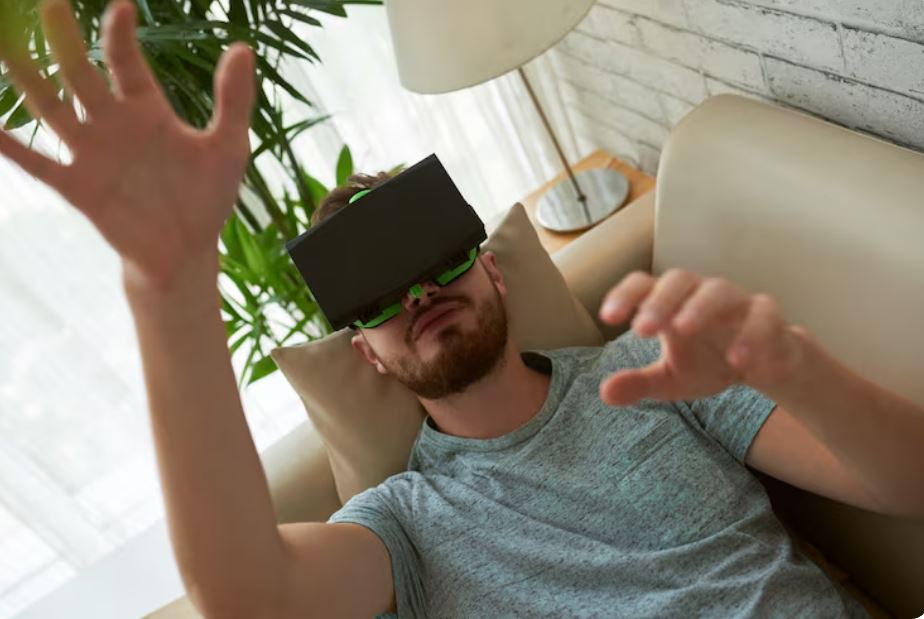
Although philosophers have been discussing this subject for centuries, the discourse has recently become more focused. Donald Hoffman, a cognitive scientist at the University of California, Irvine, has spent decades developing a mathematical argument that suggests our perceptions of the world are more akin to a simplified dashboard that evolution created for survival rather than truth, rather than windows onto objective reality. To put it plainly, there is no chance that seeing a tree indicates that there is a tree in any meaningful way. Zero, exactly. According to his framing, space-time is doomed. At best, the rocks, streets, and roses we encounter on a daily basis are helpful illusions—icons on a screen that conceal something much stranger beneath.
This could be written off as theoretical provocation. At least initially, most people do. The disturbing thing, though, is how closely it resembles what everyday life is becoming more and more like. Working from a different perspective, philosopher David Chalmers has spent years arguing that virtual experiences have real meaning and that the question of whether something is “really real” may not be as important as we think. It’s not a dystopian argument. It’s almost comforting. However, the assurance itself is instructive. To feel that reality is optional, we seem to need permission.
Over the past ten or so years, there seems to have been a subtle change in how people orient themselves toward the physical world. This change hasn’t been noticeable or dramatic. The man isn’t exactly ignoring the roses when he takes a selfie in front of them. They are being used by him. They now serve as a backdrop, a texture, and the raw material for events that take place elsewhere, on a screen, or in a moment that has been altered. Before the experience was completely felt, it was taken out and uploaded.
It’s genuinely unclear if this is evolution doing what it has always done, which is to filter reality down to what is immediately useful, or if it’s something more recent and intentional. According to Hoffman’s argument, there isn’t any significant difference. Instead of creating precise maps, brains have always taken short cuts and created survival maps. The smartphone is simply the newest and most effective shortcut available. Perhaps the more important question to ask is whether the interface we are currently using is beneficial to us rather than whether our perceptions are correct.
It’s difficult to ignore the fact that the answer appears to be no for a lot of people. Psychologists use terms like “derealization” and “maladaptive daydreaming,” which describe situations where the internal world becomes more compelling than the external one, to describe depression, dissociation, and the general feeling that everyday life feels thin or somehow not quite convincing. These phenomena are not new. This tendency was not brought about by the digital environment. However, it might have provided it with infrastructure.
For the majority of human history, reality required direct negotiation. You sensed its opposition. Water was necessary for the roses to survive. The repercussions were visible, immediate, and tangible. There is a compelling argument to be made that this resistance was a gift rather than a constraint, something that gave accomplishment its significance and grounded experience. Whether a world of frictionless interfaces—one that accommodates preference and rewards attention rather than effort—can offer the same is still up for debate. The roses are still in bloom. The only thing missing is the awareness.
