Close Menu
Tim Smyth ArtTim Smyth Art
    Facebook X (Twitter) Instagram
    Facebook X (Twitter) Instagram
    Tim Smyth ArtTim Smyth Art
    Subscribe
    • Home
    • Art Of Photography
    • Art and Culture
    • Latest
    • Celebrities
    • News
    • Privacy Policy
    • Contact US
    • Terms Of Service
    • About Us
    Tim Smyth ArtTim Smyth Art
    Home » What Judges Are Actually Looking for in Documentary Photography Competitions in 2026
    Art Of Photography

    What Judges Are Actually Looking for in Documentary Photography Competitions in 2026

    Georgia WestonBy Georgia WestonJuly 2, 2026No Comments3 Mins Read
    Facebook Twitter Pinterest LinkedIn Tumblr Email
    Share
    Facebook Twitter LinkedIn Pinterest Email

    The majority of photographers who compete in documentaries spend weeks contemplating the shot. The light, the framing, the decisive moment. The caption is something they focus on much less. And many entries quietly collapse at that point.

    A pattern can be seen if you take the time to read what the judges of the British Photography Awards have to say about the documentary category. They want the picture to educate them. The word “inform” has more significance than it first appears. A beautiful image of a displaced community, shot with technical precision, still raises questions if nothing around it explains what the viewer is actually looking at. Context isn’t supplementary. It’s a component of the picture’s argument.
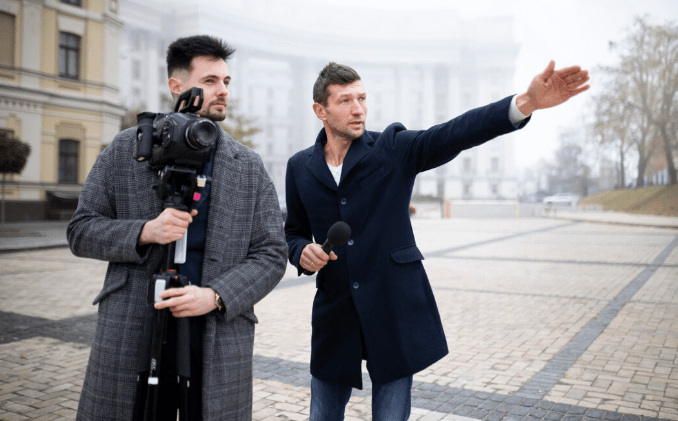
    What Judges Are Actually Looking for in Documentary Photography Competitions in 2026
    What Judges Are Actually Looking for in Documentary Photography Competitions in 2026

    The United States, France, Ghana, Japan, Mexico, and the United Kingdom are represented on the jury for the 2026 Sony World Photography Awards. That geographic spread isn’t accidental or cosmetic. It shows a real change in the way the industry views who gets to judge whether a story has been told well and whose stories matter. Having already shaped multiple editions of the competition, Monica Allende is back as chair. There’s a sense that the panel, under her direction, is genuinely interested in work that doesn’t look like work that has won before. It’s more difficult to accomplish than it seems.

    What judges across multiple 2026 competitions keep returning to is perspective — not just compositional perspective, but point of view. With a good camera, anyone can stand in a challenging situation. Fewer photographers can convey the reason for their presence. The Ocean Conservancy’s 2026 contest stated clearly that they are seeking original viewpoints or subjects, as well as narrative or emotional resonance. The World Press Photo jury could be subject to the same framing. Even though they are not always able to express it right away, seasoned judges can quickly discern the emotional logic of an image—why this moment, why this angle, why now.

    Identity tension has always been at the core of documentary photography. Is it journalism or art? Evidence or expression? The best entries in 2026 competitions seem to be the ones that don’t try to resolve that tension cleanly but instead lean into it. Particularly, the British Photography Awards state that entries may address topics “that may not be considered mainstream discourse.” That is a significant statement. It’s possible that, despite technical skill, judges are subtly worn out by familiar subject matter shot in familiar ways.

    The most underappreciated component is still captioning. A caption is a component of the narrative structure in the documentary category, not a label. When judges compare an otherwise captivating image with a vague or generic caption, they will notice the disparity. The caption is responsible for providing context and meaning to the emotion captured in the photograph. When one is neglected, the other is weakened.

    Looking at shortlists from major competitions over the past few years, it’s difficult to ignore the fact that the images that typically place well share a quality that is actually challenging to produce. They feel observed rather than constructed — as though the photographer waited, or wandered, or simply stayed long enough for something real to happen in front of them. The difference between an entry that is shortlisted and one that does not advance past the first round is likely to be more about patience than equipment or technique.

    Competitions Judges
    Share. Facebook Twitter Pinterest LinkedIn Tumblr Email
    Georgia Weston

      Georgia Weston writes about migration stories, photography, and the changing aesthetics of contemporary cities. She also writes about the politics of public space, visual storytelling, and modern culture. Her research examines how deeper social structures are reflected in everyday settings, food systems, and art. She gives stories at the nexus of image and society a sharp yet measured voice, with an emphasis on documentary practices and cultural identity.

      Related Posts

      Why Blind Judging Is Becoming the Gold Standard at Major Photography Festivals

      July 2, 2026

      Why Documentary Photography Festivals Are Becoming Spaces for Activism, Not Just Exhibition

      July 2, 2026

      From Moments to Arcs – Why Long-Form Visual Storytelling Is Replacing the Single Iconic Photograph

      June 30, 2026
      Leave A Reply Cancel Reply

      You must be logged in to post a comment.

      Art Of Photography

      Why Blind Judging Is Becoming the Gold Standard at Major Photography Festivals

      By Georgia WestonJuly 2, 20260

      Over the past few years, there has been a subtle shift in the photography industry…

      What Judges Are Actually Looking for in Documentary Photography Competitions in 2026

      July 2, 2026

      Why Documentary Photography Festivals Are Becoming Spaces for Activism, Not Just Exhibition

      July 2, 2026

      From Moments to Arcs – Why Long-Form Visual Storytelling Is Replacing the Single Iconic Photograph

      June 30, 2026

      Why Most Working Documentary Photographers Are Freelance — And What That Actually Means for the Industry

      June 30, 2026

      The Untrained Eye Is Now the Most Trusted Eye: How Local Photographers Are Rewriting Global News

      June 29, 2026

      The Last Roll of Film: How 2026 Became the Year Analog Fought Back Against the Algorithm

      June 29, 2026

      How Tim Smyth’s My Son’s Absence Gave Migrants a Dignity That News Cameras Never Could

      June 29, 2026

      Why Raw Documentary Work Is Quietly Replacing Perfect Photos in 2026

      June 27, 2026

      Why Tim Smyth’s Approach to Documentary Photography Resists the Industry’s Need for Spectacle

      June 27, 2026

      Nearly a Third of Photographers Explored a New Genre Last Year — Documentary Work Led the List

      June 27, 2026

      The Local Turn: How 31 of 42 World Press Photo Winners in 2026 Came From the Story Itself

      June 27, 2026

      Why Documentary Photographers Are Walking Away From Commercial Work for the First Time in a Decade

      June 27, 2026

      The Quiet Obsession Behind Tim Smyth’s Photography: One Question, Many Subjects

      June 27, 2026

      The Bristol Photographer Whose Subjects Range From Discarded Food to Displaced People

      June 25, 2026
      Facebook X (Twitter) Instagram Pinterest
      © 2026 ThemeSphere. Designed by ThemeSphere.

      Type above and press Enter to search. Press Esc to cancel.