Close Menu
Tim Smyth ArtTim Smyth Art
    Facebook X (Twitter) Instagram
    Facebook X (Twitter) Instagram
    Tim Smyth ArtTim Smyth Art
    Subscribe
    • Home
    • Art Of Photography
    • Art and Culture
    • Latest
    • Celebrities
    • News
    • Privacy Policy
    • Contact US
    • Terms Of Service
    • About Us
    Tim Smyth ArtTim Smyth Art
    Home » Why a Festival About Vulnerability Is Reshaping How Documentary Photography Gets Curated
    Art and Culture

    Why a Festival About Vulnerability Is Reshaping How Documentary Photography Gets Curated

    Ellis StevensonBy Ellis StevensonJune 22, 2026No Comments4 Mins Read
    Facebook Twitter Pinterest LinkedIn Tumblr Email
    Share
    Facebook Twitter LinkedIn Pinterest Email

    In most serious documentary photography exhibitions, there’s a moment when you can’t help but feel uneasy, as if the person in the picture didn’t really want to be there. The industry has endured this unease for many years, mostly in silence. This silence is starting to end—not in scholarly publications or editorial memos, but in the actual programming choices made by festivals that have determined that vulnerability is a duty to be carried rather than a resource to be exploited.

    In this sense, FOTODOKS in Munich, which held its 2025 edition in October, is something to be aware of. The festival’s programming philosophy is based on modern documentary photography, and it consistently raises ethical issues. Who is the image’s author? What benefits does the subject receive from being observed? Although these questions are not new, they are being asked with a greater degree of seriousness, and more significantly, they are starting to influence which works are shown and which are not.

    Contrary to popular belief, the change is more structural. Documentary photography followed an implicit hierarchy for a large portion of the 20th century: the photographer saw, the subject was seen, and the audience consumed. Festivals and editors honored the one pivotal image that could halt a reader in the middle of a page, condensing suffering into a composition that was worthy of recognition. In that tradition, there was real craft. Beneath it, however, was a sort of extractive logic that used the darkest moments of other people as raw material for narrative.

    Subject agency, or the question of what the person being photographed truly wants from the interaction, is evolving from a personal ethic to a curatorial criterion. Photographers in this new field describe procedures that resemble negotiation more than hunting. long-term connections made before the camera shows up. editorial control that is shared. Projects that require years as opposed to weeks. The final product is perhaps much more honest, but it is also slower, messier, and more difficult to package into a festival wall.
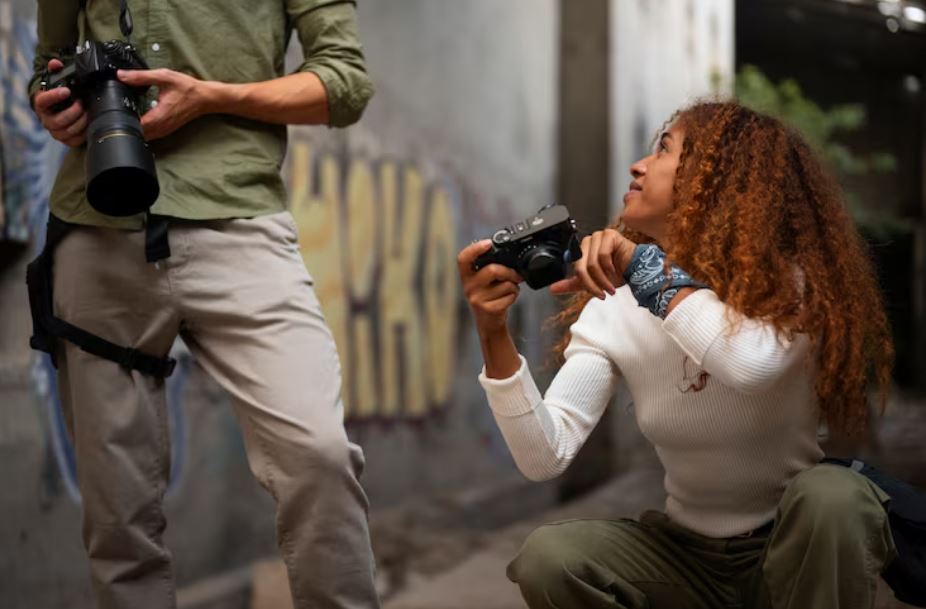
    Why a Festival About Vulnerability Is Reshaping How Documentary Photography Gets Curated
    Why a Festival About Vulnerability Is Reshaping How Documentary Photography Gets Curated

    There is a perception in the industry that this change was occurring covertly within individual practices long before festivals gave it official recognition. The discomfort of the invisible photographer—the way an image gives the impression of transparent observation while completely hiding the curator’s intent—has been discussed in writing and speech by photographers such as Finland’s Nelli Palomäki. In response, some photographers have disrupted the notion that documentary photos are neutral windows rather than manufactured arguments by making themselves visible within their own work. There is now more institutional support for that type of reflexivity.

    Whether this is a one-time event in a longer cycle or a permanent reorientation is still unknown. The neutrality of Walker Evans in the middle of the 20th century gave way to something much more subjective, and since the 1980s, the distinctions between documentary, portrait, and art photography have been gradually blurring. The current focus on ethics and vulnerability may be just the most recent development in a longer history of formal experimentation. However, it seems to be more than just fashion. It seems as though the industry is actually considering what it owes the subjects of its photographs.

    In this climate, festivals’ actions are more important than they once were. A programming team’s decision to prioritize collaborative, long-form work over parachute journalism sends a signal to the entire ecosystem, including future students determining what kind of work is worthwhile, grant-givers, editors, and photographers working in the field. That’s a big deal. There is more to the question of who is viewed, how, and on whose terms than just aesthetics. It has to do with power. Finally, documentary photography is beginning to treat it as such.

    Documentary Photography
    Share. Facebook Twitter Pinterest LinkedIn Tumblr Email
    Ellis Stevenson
    • Website

    Ellis explores public art, visual ethics, and the evolving role of documentary storytelling in a digital world. Ellis Stevenson focuses on how the systems that influence creative practice—from public institutions and funding to international cultural movements—relate to it. His writing, which frequently explores how artists, photographers, and designers react to political and economic pressures, combines critical analysis with firsthand reporting.

    Related Posts

    Why World Press Photo’s 2026 Long-Term Project Category Is Becoming More Important Than the Single Image

    June 22, 2026

    The Tuscan Hill Town Festival Quietly Becoming a Global Hub for Documentary Storytelling

    June 22, 2026

    Inside Photo London 2026 – What the UK’s Biggest Photography Fair Reveals About Where the Industry Is Heading

    June 19, 2026
    Leave A Reply Cancel Reply

    You must be logged in to post a comment.

    News

    Inside PhotoVogue Festival’s 10th Edition and What It Reveals About Visibility and the Gaze

    By Georgia WestonJune 23, 20260

    The idea of holding a photography festival inside one of Italy’s oldest libraries is subtly…

    Why World Press Photo’s 2026 Long-Term Project Category Is Becoming More Important Than the Single Image

    June 22, 2026

    The Tuscan Hill Town Festival Quietly Becoming a Global Hub for Documentary Storytelling

    June 22, 2026

    Why a Festival About Vulnerability Is Reshaping How Documentary Photography Gets Curated

    June 22, 2026

    Inside Photo London 2026 – What the UK’s Biggest Photography Fair Reveals About Where the Industry Is Heading

    June 19, 2026

    The Last Resort, 40 Years On – Why Martin Parr’s Most Famous Series Still Defines British Photography

    June 19, 2026

    Why Nearly Half of Professional Photographers Still Don’t Know What to Charge for Their Work

    June 19, 2026

    How Tim Smyth Turned a Pile of Misshapen Carrots Into a Yale and MoMA Collection Piece

    June 19, 2026

    The Strange Link Between Tim Smyth’s Carrot Portraits and His Refugee Photography in Spoleto

    June 19, 2026

    Why Tim Smyth Photographs Rejected Vegetables Like Museum Artifacts

    June 19, 2026

    C2PA Verification Is Now a Legal Requirement in Some Photojournalism Contracts — What It Actually Does

    June 19, 2026

    Documentary Photography Is the Fastest-Growing Genre Photographers Want to Shoot in 2026 — Here’s Why

    June 18, 2026

    22% of World Press Photo’s 2026 Entrants Were Women and Non-Binary — Here’s Why That Number Matters

    June 18, 2026

    Why World Press Photo Saw an 11% Rise in Entries From South America This Year

    June 18, 2026

    The Documentary Zone at Xposure 2026 Tackled Climate, Displacement, and Memory — Here’s What Stood Out

    June 18, 2026
    Facebook X (Twitter) Instagram Pinterest
    © 2026 ThemeSphere. Designed by ThemeSphere.

    Type above and press Enter to search. Press Esc to cancel.