Close Menu
Tim Smyth ArtTim Smyth Art
    Facebook X (Twitter) Instagram
    Facebook X (Twitter) Instagram
    Tim Smyth ArtTim Smyth Art
    Subscribe
    • Home
    • Art Of Photography
    • Art and Culture
    • Latest
    • Celebrities
    • News
    • Privacy Policy
    • Contact US
    • Terms Of Service
    • About Us
    Tim Smyth ArtTim Smyth Art
    Home » Searching for the Perfect Edge in Photography – Why the Frame’s Border Matters More Than You Think
    Art Of Photography

    Searching for the Perfect Edge in Photography – Why the Frame’s Border Matters More Than You Think

    Georgia WestonBy Georgia WestonMay 21, 2026No Comments3 Mins Read
    Facebook Twitter Pinterest LinkedIn Tumblr Email
    Share
    Facebook Twitter LinkedIn Pinterest Email

    The majority of photographers I’ve spoken to over the years acknowledge—sometimes with a hint of sheepishness—that they mastered the ability to see a frame’s center long before they mastered its edges. Really, it’s an odd habit. Everything in the picture’s periphery is regarded as background noise, and the center draws you in like gravity. However, an image’s edges—those subdued four lines surrounding it—often determine whether it feels roomy or claustrophobic. More experienced shooters believe that this is where the true craft resides.

    Within the first five minutes of any camera club meeting, you will hear someone bring up the rule of thirds. It is the composition’s gateway drug. Click after positioning your subject on a grid intersection. However, nobody ever discusses what’s going on around the perimeter. A fragment of an unfamiliar elbow. the streetlamp’s accidental top. The supposedly open sky was cut by a telephone wire. An otherwise strong frame can be subtly undone by these details, which are simple to overlook during intense shooting.
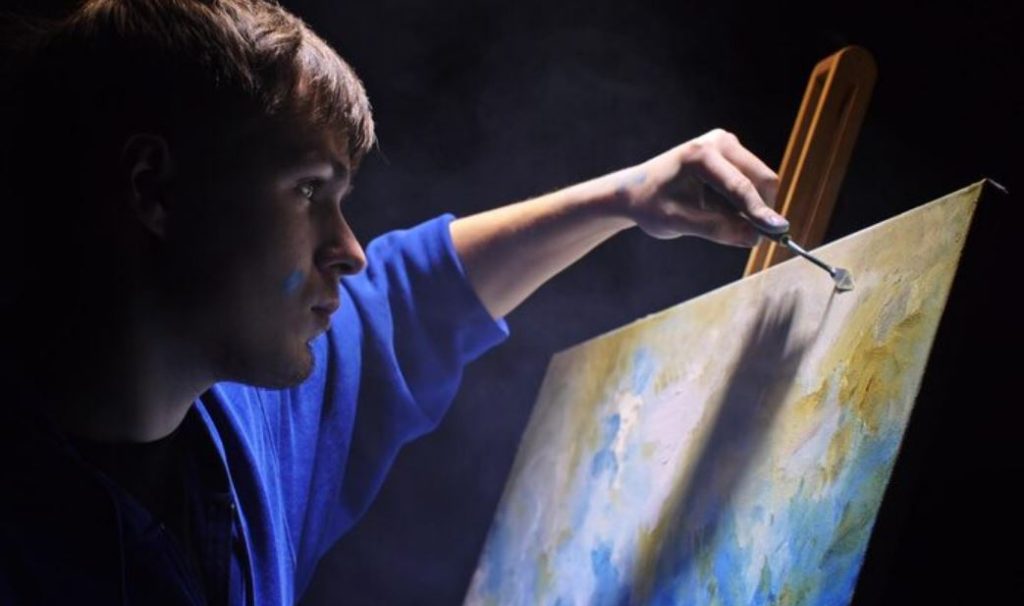
    Searching for the Perfect Edge in Photography
    Searching for the Perfect Edge in Photography

    In a 2021 article for Fstoppers, Abby Ferguson put it quite simply. Tension is created when there is very little space between your subject and the edge, and tension in the wrong place typically detracts from the image. That isn’t exactly a rule. It’s more akin to a cautionary tale transmitted by those who have committed the error themselves. I’ve also made it quite a few times. You believe you’ve hit the mark, but when you get home, you see a tree that appears to grow out of someone’s ear or a foot that has been severed at the knee.

    The intriguing thing is how this idea resembles a more technical idea. Edge detection is a field of computer vision that uses mathematical techniques to identify areas in an image where brightness changes dramatically. It’s how machines perceive an object’s boundaries. The parallel has a poetic quality. The algorithm and the photographer are both attempting to distinguish between one thing and another. The algorithm merely measures gradients, whereas the photographer is making aesthetic decisions and determining what belongs and what doesn’t.

    It seems easy to examine the edges before taking a picture. Really, it isn’t. The gaze keeps returning to the topic. You have to practically force yourself to focus on the corners, then the top, and finally the sides. Some photographers refer to it as a kind of pre-flight checklist or final checklist. Some regard it as an instinct that has been developed over thousands of frames. In any case, it’s a habit that distinguishes meticulous work from fortunate work.

    The question of what to purposefully include is another. A leading line emerges from the lower right corner. a section of space that allows a portrait to feel serene. The edge is a place to compose as well as a place to take things out. When you observe this in the work of photographers like Saul Leiter or Vivian Maier, you begin to notice how frequently the magic occurs along the edges, where the outside world subtly seeps into the frame and lends the image its significance, rather than in the center.

    After years of viewing photos, it’s difficult to ignore the fact that those borders frequently determine whether an image is memorable or not. You become intrigued by the middle. Whether you stay or not is determined by the edges.

    Perfect Edge Photography
    Share. Facebook Twitter Pinterest LinkedIn Tumblr Email
    Georgia Weston

      Georgia Weston writes about migration stories, photography, and the changing aesthetics of contemporary cities. She also writes about the politics of public space, visual storytelling, and modern culture. Her research examines how deeper social structures are reflected in everyday settings, food systems, and art. She gives stories at the nexus of image and society a sharp yet measured voice, with an emphasis on documentary practices and cultural identity.

      Related Posts

      The Quiet Erasure – When AI Learns to Photograph Absence

      May 21, 2026

      When Dinner Becomes Distance: Love, Food and Photography in the Digital Age

      April 13, 2026

      The Documentary Gaze in the Age of AI-Generated Reality

      April 10, 2026
      Leave A Reply Cancel Reply

      You must be logged in to post a comment.

      Art Of Photography

      The Quiet Erasure – When AI Learns to Photograph Absence

      By Georgia WestonMay 21, 20260

      A photograph that has been subtly, almost courteously, altered by a machine contains a certain…

      Searching for the Perfect Edge in Photography – Why the Frame’s Border Matters More Than You Think

      May 21, 2026

      Walking Away – The Art of Letting the Public Own the Work

      May 20, 2026

      The Myth of the Small Piece – Why Some Artists Refuse Intimacy

      May 20, 2026

      Making Work People Feel They Belong Is Harder Than Most Bosses Admit

      May 18, 2026

      The Manual Future – Why Artists Are Resisting Automation

      May 18, 2026

      Why Big Work Matters in a Shrinking Attention Span Era

      May 15, 2026

      From Circus Bloodlines to Urban Installations – The Nomadic Creative

      May 15, 2026

      The Studio as Sanctuary in an Age of Digital Noise – Why Artists Are Building Walls Against the Algorithm

      May 13, 2026

      Why Obsession Is the Artist’s Most Dangerous Tool

      May 13, 2026

      Paint by Numbers – The Hidden Discipline Behind Monumental Chaos

      May 11, 2026

      The Human Cost of a Headline – What Newsrooms Forget When the Cameras Move On

      May 11, 2026

      Memory as Evidence – Art in the Age of Forced Migration

      May 11, 2026

      Borders in the Frame – How Photographers Navigate Power

      May 8, 2026

      The Ethics of Charity Editions in Political Art – Where Conscience Meets Commerce

      May 8, 2026
      Facebook X (Twitter) Instagram Pinterest
      © 2026 ThemeSphere. Designed by ThemeSphere.

      Type above and press Enter to search. Press Esc to cancel.