Close Menu
Tim Smyth ArtTim Smyth Art
    Facebook X (Twitter) Instagram
    Facebook X (Twitter) Instagram
    Tim Smyth ArtTim Smyth Art
    Subscribe
    • Home
    • Art Of Photography
    • Art and Culture
    • Latest
    • Celebrities
    • News
    • Privacy Policy
    • Contact US
    • Terms Of Service
    • About Us
    Tim Smyth ArtTim Smyth Art
    Home » Borders in the Frame – How Photographers Navigate Power
    Lifestyle

    Borders in the Frame – How Photographers Navigate Power

    Georgia WestonBy Georgia WestonMay 8, 2026No Comments3 Mins Read
    Facebook Twitter Pinterest LinkedIn Tumblr Email
    Share
    Facebook Twitter LinkedIn Pinterest Email

    Photographers will frequently tell you—without being asked—that they focus more on a picture’s edges than the subject. Until you stand in a gallery and observe how the eye wanders, it sounds backwards. A stray branch here, a bright corner there, and all of a sudden, the portrait you were supposed to be looking at has lost the battle. Silently, the border has spoken for itself.

    When older photographers talk about this, a specific memory comes to mind. In a darkroom, the Omega enlarger hums. The chilly head is clicking. The lengthy, almost contemplative process of deciding how much white to leave around the image began after a negative was slid into position. A quarter of an inch seemed traditional. An inch and a half felt purposeful, almost haughty. There was not a single border that was restless. Every decision had significance, even if no one could express it.
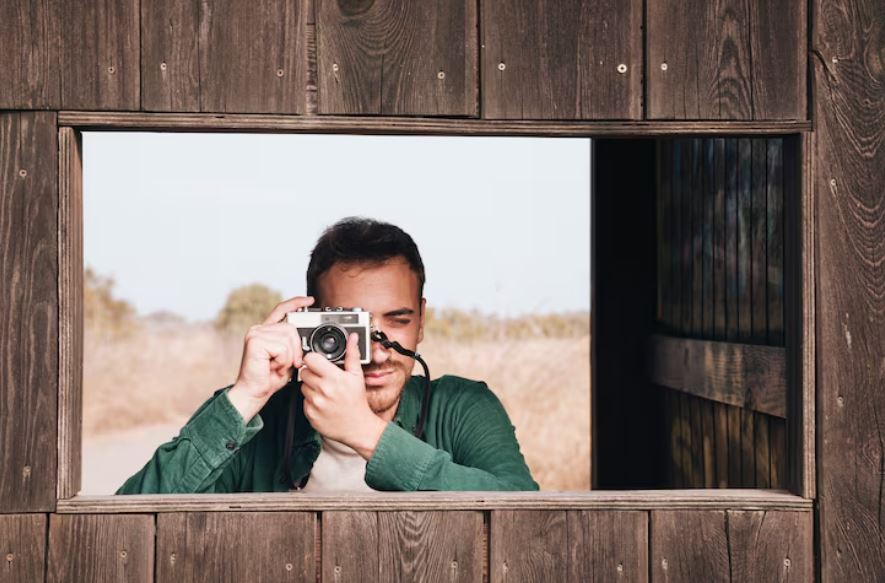
    Borders in the Frame: How Photographers Navigate Power
    Borders in the Frame: How Photographers Navigate Power

    We might be underestimating the extent to which these choices influence the cultural transmission of photographs. A thick white mat with a wedding portrait on it reads “heirloom.” When the same image is cropped flush to the edge and shared on Instagram, it appears as content. same image. distinct power. It has been interesting to watch this develop over the past ten years because many photographers don’t seem to notice that the border has changed from a craft decision to a marketing one.

    Californian landscape photographer Ralph Nordstrom once wrote about a redwood photo that he almost ruined by failing to notice the upper-left corner. A thumbnail-sized patch of bright cloud had infiltrated the picture. Even though the path leading in was textbook and the God rays in the trees were breathtaking, the eye kept returning to that tiny flare of light. Later, he cropped it. The image was effective. But the lesson stuck with him more than the picture. According to him, attention is drawn to bright, sparkly objects. That’s just the way the brain functions.

    Photographers who give borders a lot of thought seem to be thinking about control. control of the experience rather than manipulation of the audience. A window on an airplane, an arch, a doorway, a tent flap, and a frame inside a frame are examples of boundaries inside boundaries. They direct the eye’s resting place. They imply a hierarchy. Persuasion differs from a press release in that the audience feels guided instead of instructed.

    However, all of this has become more complex in the digital age. A few years ago, white borders on Instagram gained popularity, then subtly declined before making a comeback. Raising contrast and allowing the image to breathe are claims made by some photographers. Some consider them to be priceless, almost theatrical. Determining which side is correct is difficult. Most likely neither, completely. In actuality, a border is a tiny, precise choice that serves a particular purpose, and when it succeeds, you are completely unaware of it.

    That could ultimately be the edge’s quiet power. It keeps the picture in position. As Nordstrom liked to say, it keeps the eye trapped inside the frame. And the photographers who are aware of this are the ones whose images continue to be popular long after fashions change.

    Borders in the Frame
    Share. Facebook Twitter Pinterest LinkedIn Tumblr Email
    Georgia Weston

    Georgia Weston writes about migration stories, photography, and the changing aesthetics of contemporary cities. She also writes about the politics of public space, visual storytelling, and modern culture. Her research examines how deeper social structures are reflected in everyday settings, food systems, and art. She gives stories at the nexus of image and society a sharp yet measured voice, with an emphasis on documentary practices and cultural identity.

    Related Posts

    Why World Press Photo’s 2026 Long-Term Project Category Is Becoming More Important Than the Single Image

    June 22, 2026

    The Tuscan Hill Town Festival Quietly Becoming a Global Hub for Documentary Storytelling

    June 22, 2026

    The Billion-Pound Business of Food Waste

    June 16, 2026

    Comments are closed.

    News

    Inside PhotoVogue Festival’s 10th Edition and What It Reveals About Visibility and the Gaze

    By Georgia WestonJune 23, 20260

    The idea of holding a photography festival inside one of Italy’s oldest libraries is subtly…

    Why World Press Photo’s 2026 Long-Term Project Category Is Becoming More Important Than the Single Image

    June 22, 2026

    The Tuscan Hill Town Festival Quietly Becoming a Global Hub for Documentary Storytelling

    June 22, 2026

    Why a Festival About Vulnerability Is Reshaping How Documentary Photography Gets Curated

    June 22, 2026

    Inside Photo London 2026 – What the UK’s Biggest Photography Fair Reveals About Where the Industry Is Heading

    June 19, 2026

    The Last Resort, 40 Years On – Why Martin Parr’s Most Famous Series Still Defines British Photography

    June 19, 2026

    Why Nearly Half of Professional Photographers Still Don’t Know What to Charge for Their Work

    June 19, 2026

    How Tim Smyth Turned a Pile of Misshapen Carrots Into a Yale and MoMA Collection Piece

    June 19, 2026

    The Strange Link Between Tim Smyth’s Carrot Portraits and His Refugee Photography in Spoleto

    June 19, 2026

    Why Tim Smyth Photographs Rejected Vegetables Like Museum Artifacts

    June 19, 2026

    C2PA Verification Is Now a Legal Requirement in Some Photojournalism Contracts — What It Actually Does

    June 19, 2026

    Documentary Photography Is the Fastest-Growing Genre Photographers Want to Shoot in 2026 — Here’s Why

    June 18, 2026

    22% of World Press Photo’s 2026 Entrants Were Women and Non-Binary — Here’s Why That Number Matters

    June 18, 2026

    Why World Press Photo Saw an 11% Rise in Entries From South America This Year

    June 18, 2026

    The Documentary Zone at Xposure 2026 Tackled Climate, Displacement, and Memory — Here’s What Stood Out

    June 18, 2026
    Facebook X (Twitter) Instagram Pinterest
    © 2026 ThemeSphere. Designed by ThemeSphere.

    Type above and press Enter to search. Press Esc to cancel.