

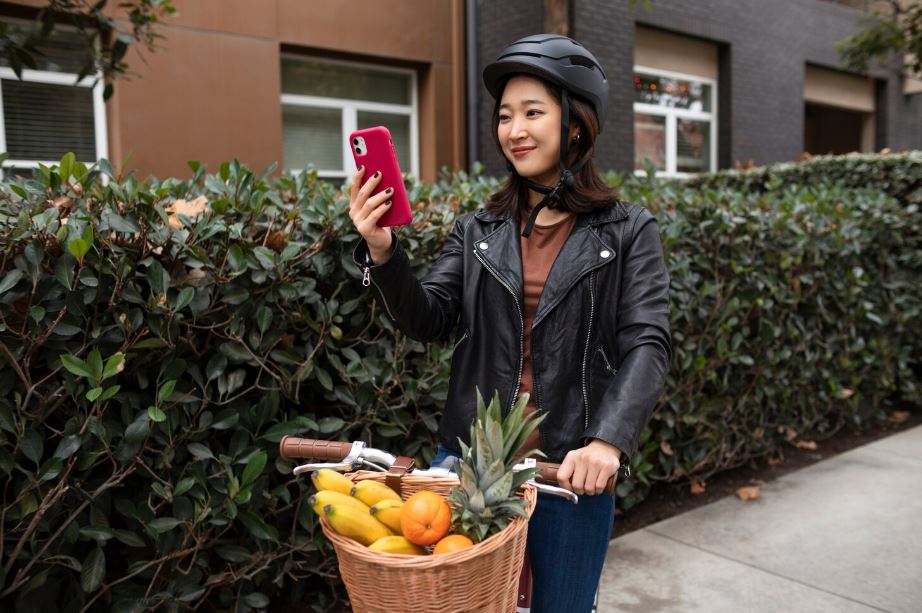
On a Saturday morning, you’ll notice something unexpected if you walk into any reasonably well-stocked grocery store with good lighting, a cheese section that smells like cheese, and maybe a small basket of heirloom tomatoes placed right next to the entrance. A twenty-two-year-old is holding up their phone and taking a picture of their shopping cart somewhere between the adaptogenic mushroom drinks and the oat milk. Not even a restaurant, not a meal, not their food. their groceries. Still in bags and clamshells, raw and uncooked. And they appear genuinely happy.
You want to roll your eyes. However, it’s worthwhile to pause and consider why. since this isn’t arbitrary. It’s possible that what appears to be a peculiar Gen Z habit is actually something more thoughtful—a tiny, intentional act of recovering something that was lost somewhere between the delivery app boom, the pandemic lockdowns, and an almost entirely online adolescence.
| Generation | Gen Z (born 1997–2012) |
| U.S. Population Share | 21% of U.S. population |
| Estimated Spending Power by 2030 | $12.6 trillion (Bank of America Institute) |
| In-store shopping preference | 88% prefer shopping in person (2025 data) |
| Gen Z who enjoy grocery shopping | 48% like or love it (vs. 29% of Boomers) |
| Top purchase driver | Price (80%), followed by brand values & social proof |
| Product discovery channels | TikTok, Instagram, peer recommendations, in-store exploration |
| Preferred grocery retailers | Walmart, Aldi (value); Erewhon, Whole Foods (premium) |
| Cultural significance | Grocery runs as social ritual, identity expression & content creation |
| Reference / further reading | Grocery Dive — Gen Z’s Growing Power |
Those born between 1997 and 2012, collectively known as Gen Z, have grown up in a world of seamless convenience. Everything shows up. Food, clothing, entertainment, and social approval are all delivered to a door or a screen. However, according to data from 2025, 88% of consumers still prefer visiting physical stores. Particularly among Gen Z, 58% of respondents say they anticipate increasing their in-store shopping in the future—the highest percentage of any age group. They are not a generation that has forgotten what convenience is like. That is a generation that consciously chooses not to use it frequently.
That includes the photography. Gauri Mahajan, 25, started doing her own vegetable shopping on foot after moving to Mumbai and becoming disoriented by the size of the city. She learned the rhythms of the market close to her apartment and noticed a fig tree along the way that she now checks every week for ripe fruit. She said, “I felt so new to everything,” during that period. The grocery run turned into a ritual, and rituals are captured on camera. Not to post all the time. Sometimes just to hang on.
Speaking with young people about this gives me the impression that the meaning of food photography has changed. Performance was the focus of the 2010s version, which included the restaurant flat-lay, the avocado toast, and the creatively blurred coffee cup. It said, “Look at my life, look where I am, and look what I can afford.” The picture of the grocery store feels different. It’s not as loud. Someone discovered a new brand of pasta after reading three hundred TikTok comments about it, a haul of veggies, and a jar of something fermented. It’s more akin to saying, “Look what I made happen, look how I’m taking care of myself.”
Before the story gets too neat, it’s important to recognize that there is no one-size-fits-all approach to grocery shopping among Generation Z. Some of them are searching for the newest collaboration smoothie from Erewhon, which costs $20 per bottle. They are taking pictures of the cup against the sun-drenched LA parking lot. Others are at Aldi, carefully planning a week’s worth of meals around whatever is listed on the flyer because rent is exorbitant, inflation is real, and stretching a budget truly takes skill. Each group is taking pictures of their carts. Although the impulse is similar, the meaning is different: I want a record of this decision because it matters to me.
Of course, social media plays a part in all of this. Grocery hauls on TikTok are now a separate genre. At upscale stores, Gen Z influencers fill their carts and record everything, including the price tags, the labels, and the attractive arrangement of the merchandise. Reviews and ratings influence what is purchased and what remains on the shelf. If the right person posts about a product, it can go from niche to out-of-stock in just one week. The retail industry is constantly attempting to adjust to this physical reality: the store is the last stop on a journey of discovery that started online, sometimes weeks earlier.
However, the data on digital influence doesn’t fully capture what’s going on in the store itself. It turns out that one of the last truly social, public, in-person rituals that most people still engage in is grocery shopping. According to psychologist Sanjana Nair, these seemingly insignificant encounters—the stranger complimenting your shirt in the cereal aisle, the store employee who is aware of your preferences, the overheard dispute over whether to purchase the store brand or the name brand—are actually fostering a sense of community. “People underestimate how important these moments of connection are,” she’s stated. “Ordering online while you’re cooped up at home isolates you more, while this makes you feel like you’re part of something bigger.” When it comes to purchasing milk and eggs, that is a striking statement.
It seems like Gen Z knows this better than they are acknowledged. When it comes to technology, they are not naive. It was the foundation of their social lives. The grocery store, with its fluorescent lights, slightly worn shopping carts, and total disregard for your number of followers, offers something that an app just cannot. However, there is a particular kind of loneliness that results from living a life through screens. It’s tangible. It has noise, odor, and unintentional human contact. You have to be somewhere in your body, using your hands to make decisions.
Nowadays, couples are organizing grocery dates. On Saturday mornings, friends go on hauls together. A 23-year-old London resident goes to her neighborhood store almost every day, in part because of the food and in part because it’s an underappreciated third space where people from all walks of life congregate. There, she can occasionally converse with the immigrant shopkeeper in Hindi and feel momentarily closer to home. These are not the actions of a generation that lacks life experience. These are the actions of a generation that is actively choosing to participate in it, possibly more than any previous generation.
It’s still unclear if the pictures are about identity, memory, status, or just enjoying a neatly arranged cart. Perhaps it doesn’t have to be just one thing. What is more certain is that Gen Z’s grocery habits are changing the entire food retail industry’s perspective on everything from store design to product placement to how to foster brand loyalty with a generation that can detect inauthenticity from three aisles away. Of all places, the supermarket has taken on cultural significance. And Gen Z showed up prepared with their cameras.
